
PVC Roofing Systems in Ontario, CA
PVC Membrane: The Spec When Grease or Chemicals Hit the Roof
Most Ontario roofs never see anything harsher than dust and sun, and TPO handles that fine. A smaller set of buildings put grease-laden exhaust, solvent fumes, or petroleum residue directly on the membrane, and that is a different chemistry problem. PVC is the single-ply we reach for on those roofs, and the reason comes down to what the polymer itself resists, not marketing.
Why PVC Resists What TPO and EPDM Don't
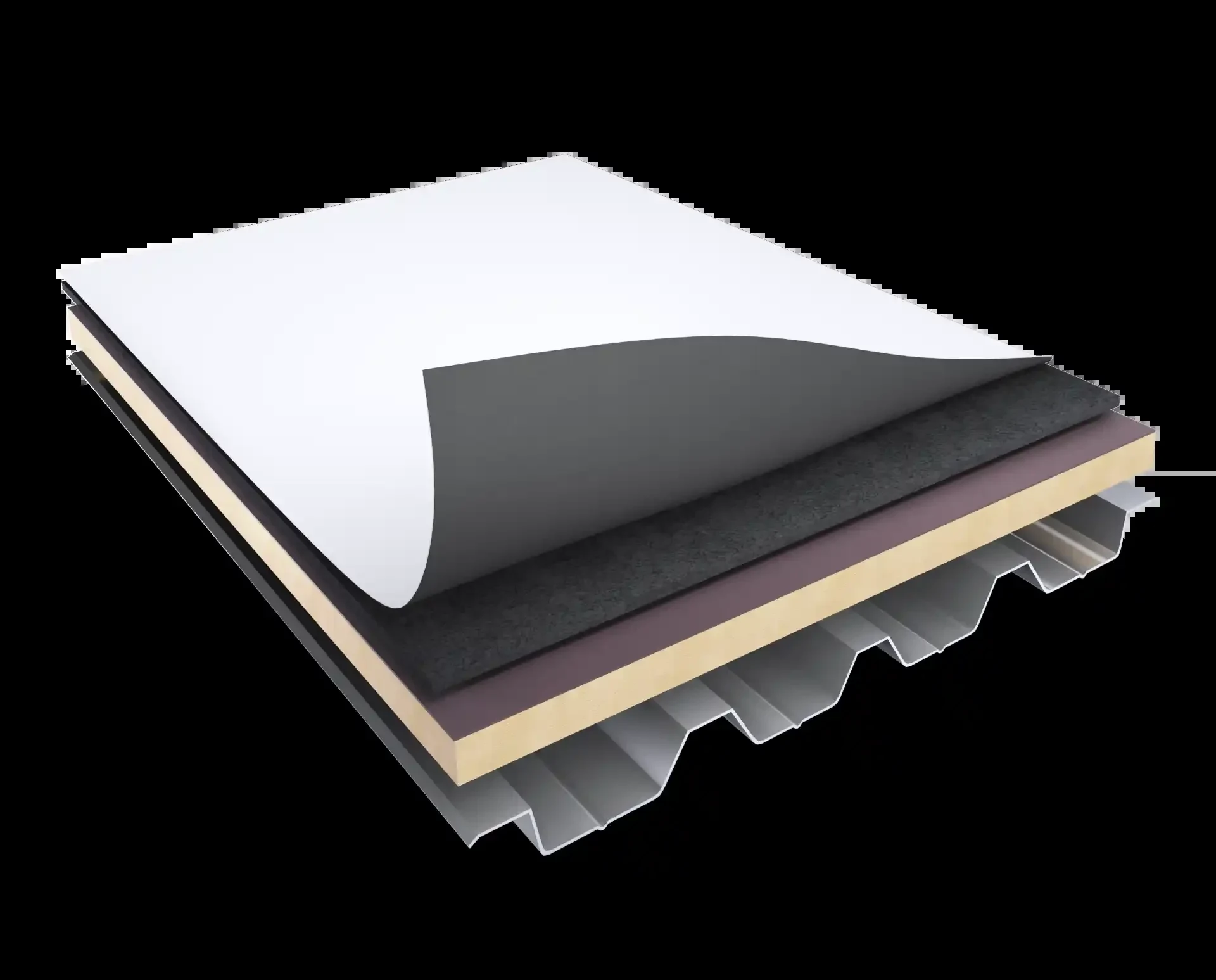
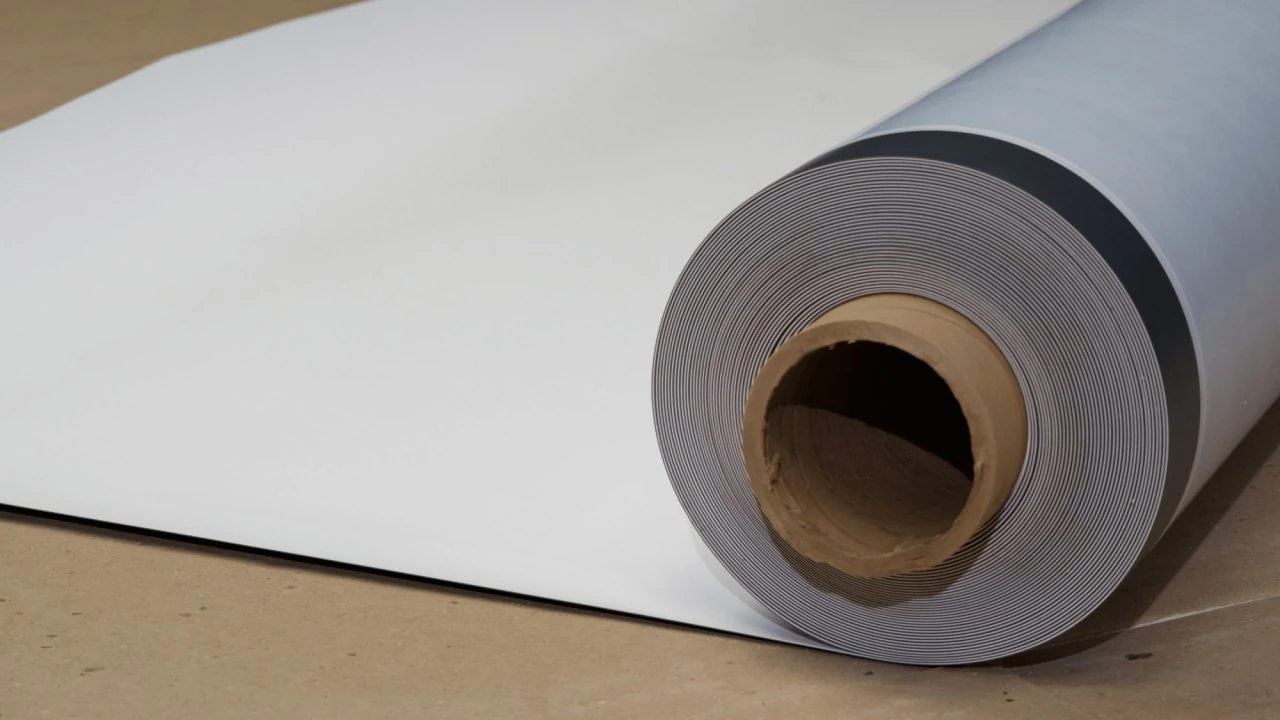
Polyvinyl chloride sheet is plasticized PVC resin, chemically distinct from the polyolefin base of TPO or the vulcanized rubber of EPDM. PVC's molecular structure gives it meaningfully better resistance to animal fats, cooking oils, and many petroleum-based compounds , the exact contaminants that soften and degrade TPO and EPDM membranes over time through plasticizer exchange or swelling. It is also heat-welded like TPO, so seams fuse into a continuous membrane rather than relying on adhesive or tape.
The tradeoff is welding parameters. PVC welds at different temperatures and speeds than TPO, and the two sheets are not interchangeable at the seam , a PVC roof gets PVC flashing accessories and pipe boots throughout, not TPO parts substituted because they were on the truck. Our crews run separate weld settings and test welds specifically for PVC jobs rather than treating it as a TPO variant.
Where Grease and Chemical Exposure Actually Show Up Locally
Ontario Mills and the restaurant pads along Vineyard Avenue and Fourth Street put a meaningful concentration of commercial kitchen exhaust discharge directly onto low-slope roofs, and grease-laden air condenses on membrane surfaces near hood exhaust terminations whether the tenant wants it to or not. Auto dealership service and paint-and-body buildings along Ontario's Auto Center Drive corridor are the other repeat customer: paint booth exhaust carries solvent residue that we have seen soften standard TPO at the exhaust termination point within a few seasons. On manufacturing buildings around Corona's Highway 91 industrial corridor, similar exposure comes from process exhaust and occasional spill events near loading areas.
None of this means every roof in these categories needs PVC. A restaurant pad with the exhaust terminated well clear of the roof surface, properly ducted and capped, may never see enough grease contact to matter. We look at hood placement, duct routing, and termination height before recommending PVC over a standard TPO spec, since the upcharge should track actual exposure conditions rather than the tenant type on the lease.
- Sheet thicknesses: 50, 60, and 80 mil, reinforced with polyester scrim
- Seaming: hot-air heat-welded, same method family as TPO but different weld settings
- Chemical resistance: notably better than TPO or EPDM against grease, oils, and many solvents
- Attachment: mechanically fastened or fully adhered, sized to ASCE 7 wind pressures for the site
- Typical warranty: 15 to 20 years NDL depending on thickness and flashing detail
- Best-fit roofs: restaurant exhaust terminations, auto paint and service buildings, chemical or solvent exposure zones
The Plasticizer Question, Answered Honestly
Older-generation PVC membranes had a real weakness: the plasticizers that keep the sheet flexible could migrate out over years of UV and heat exposure, leaving the membrane brittle at the surface. Manufacturers reformulated with higher-molecular-weight plasticizers and better-stabilized compounds specifically to address that failure mode, and current commercial-grade PVC sheets perform far better on this point than the products that gave the category its early reputation. We still flag it as a factor when quoting a 20-year term: flashing detail and seam quality matter as much as the sheet itself in whether that warranty period is realistic in our UV load.
Cost Against TPO, Honestly Priced
PVC generally costs more per square foot than TPO of comparable thickness, and that premium should map to a real exposure condition, not a blanket upgrade. On a straightforward warehouse roof with no grease or chemical contact, we quote TPO and PVC side by side so the owner can see the delta is buying resistance to a condition that may not exist on that particular building. On a restaurant pad, dealership service bay, or chemical-adjacent manufacturing roof, the math usually favors PVC once you price out the TPO membrane replacement that grease contact would otherwise force inside the warranty term.
Common Questions on PVC Roofing
Does every restaurant roof in Ontario need PVC?
No. It depends on hood exhaust placement and how much grease-laden air actually contacts the membrane near the termination point. We inspect duct routing and termination height before recommending PVC over standard TPO.
Can PVC and TPO share flashing accessories?
No. The two membranes weld at different parameters and are not chemically compatible at a fused seam. A PVC roof needs PVC-specific pipe boots, corner flashings, and accessories throughout, not substitutions from a TPO parts inventory.
Is PVC more expensive than TPO installed?
Generally yes, per square foot, though the gap narrows on smaller roofs where labor is a larger share of total cost. We price both on any job without confirmed chemical exposure so the owner can weigh the premium against the actual risk on that roof.
Does PVC handle Ontario's UV load as well as TPO?
Modern PVC formulations perform well under sustained UV exposure, though the plasticizer stability of the specific product line matters more for PVC than it does for TPO's scrim-and-weathering-ply construction. We stick with manufacturer lines that have a strong track record in this heat and sun load.
Can you recover an existing TPO roof with PVC?
Yes, following the same recover rules as any single-ply system: a moisture survey confirming dry insulation, one existing membrane layer maximum, and adequate deck attachment. We do not warranty a recover over wet substrate regardless of the membrane going down.
Related
Ready to review the roof scope?
Request a Roof AssessmentProject List
60-Mil TPO Roofing in Ontario, CA
60-mil TPO spec details for Ontario, CA warehouses and retail: membrane construction, attachment options, Title 24 compliance, and 20-year lifecycle math.
80-Mil TPO Roofing in Ontario, CA
80-mil TPO for Ontario, CA logistics and solar-ready roofs: thickness-over-scrim numbers, 25 to 30-year warranties, and cost-per-year comparisons vs 60-mil.
Black EPDM Roofing in Ontario, CA
Black EPDM specs for Ontario, CA: sheet thicknesses, ballast vs. adhered attachment, Title 24 exceptions, and where rubber roofing still beats TPO on cost.
White EPDM Roofing in Ontario, CA
White EPDM for Ontario, CA commercial roofs: how the white surface is built, Title 24 compliance, adhesive-seamed detailing, and long-term reflectivity numbers.
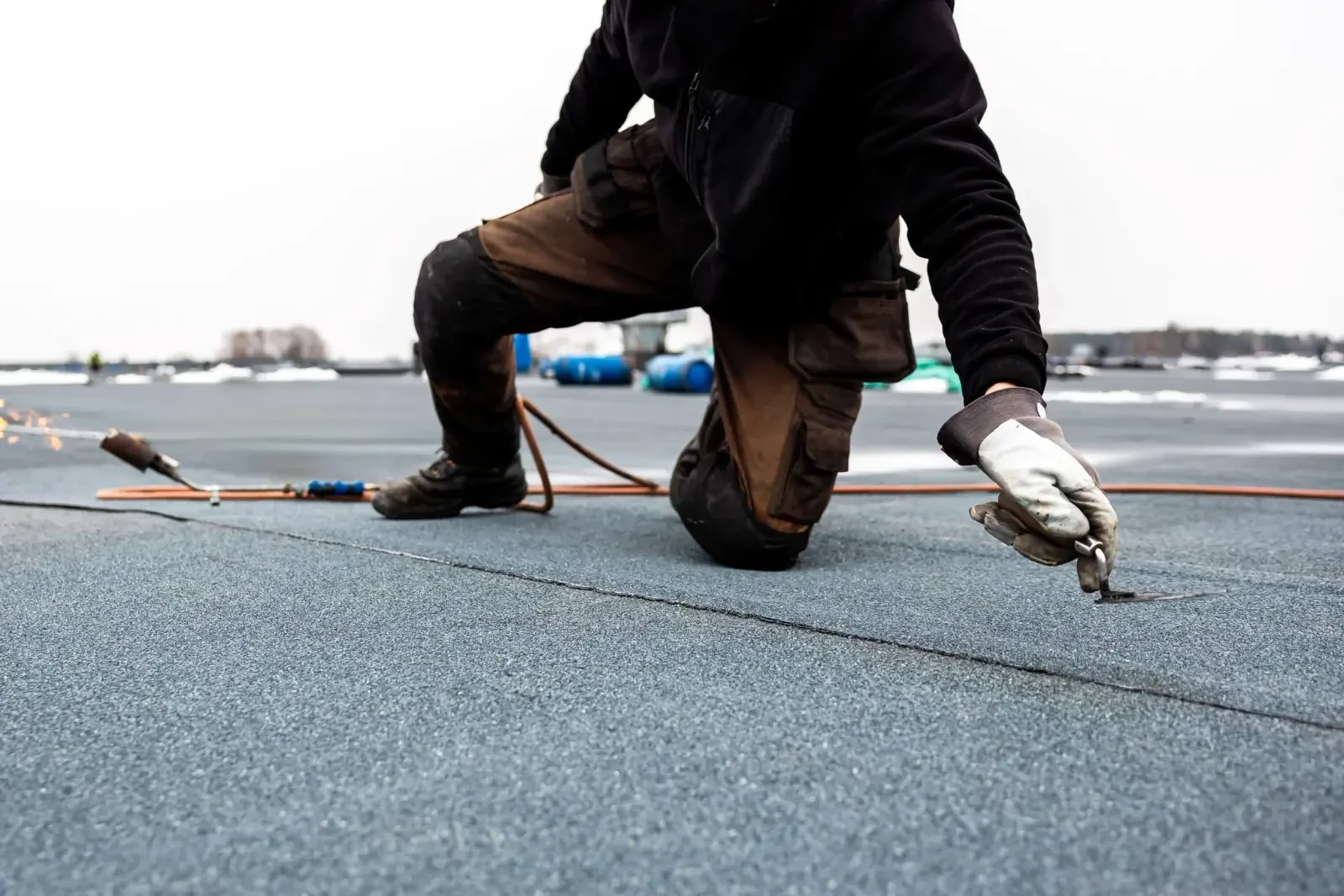
SBS Modified Bitumen Roofing in Ontario, CA
SBS modified bitumen for Ontario, CA's older commercial buildings: application methods, multi-ply redundancy, and where it still beats single-ply membrane.
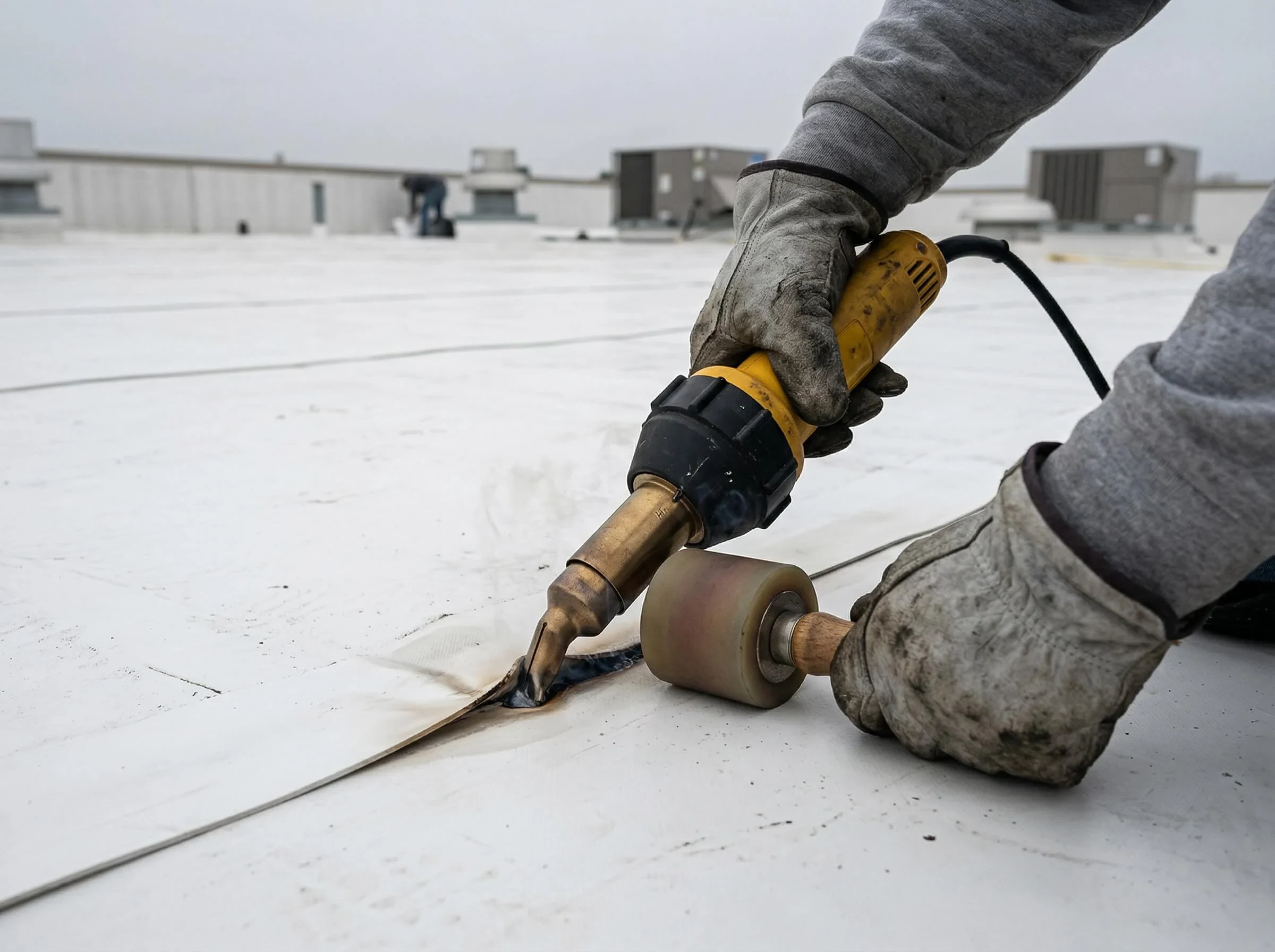
PVC Roofing Systems in Ontario, CA
PVC membrane specs for Ontario, CA restaurants, dealerships, and manufacturing roofs: grease and chemical resistance, weld parameters, and warranty terms.
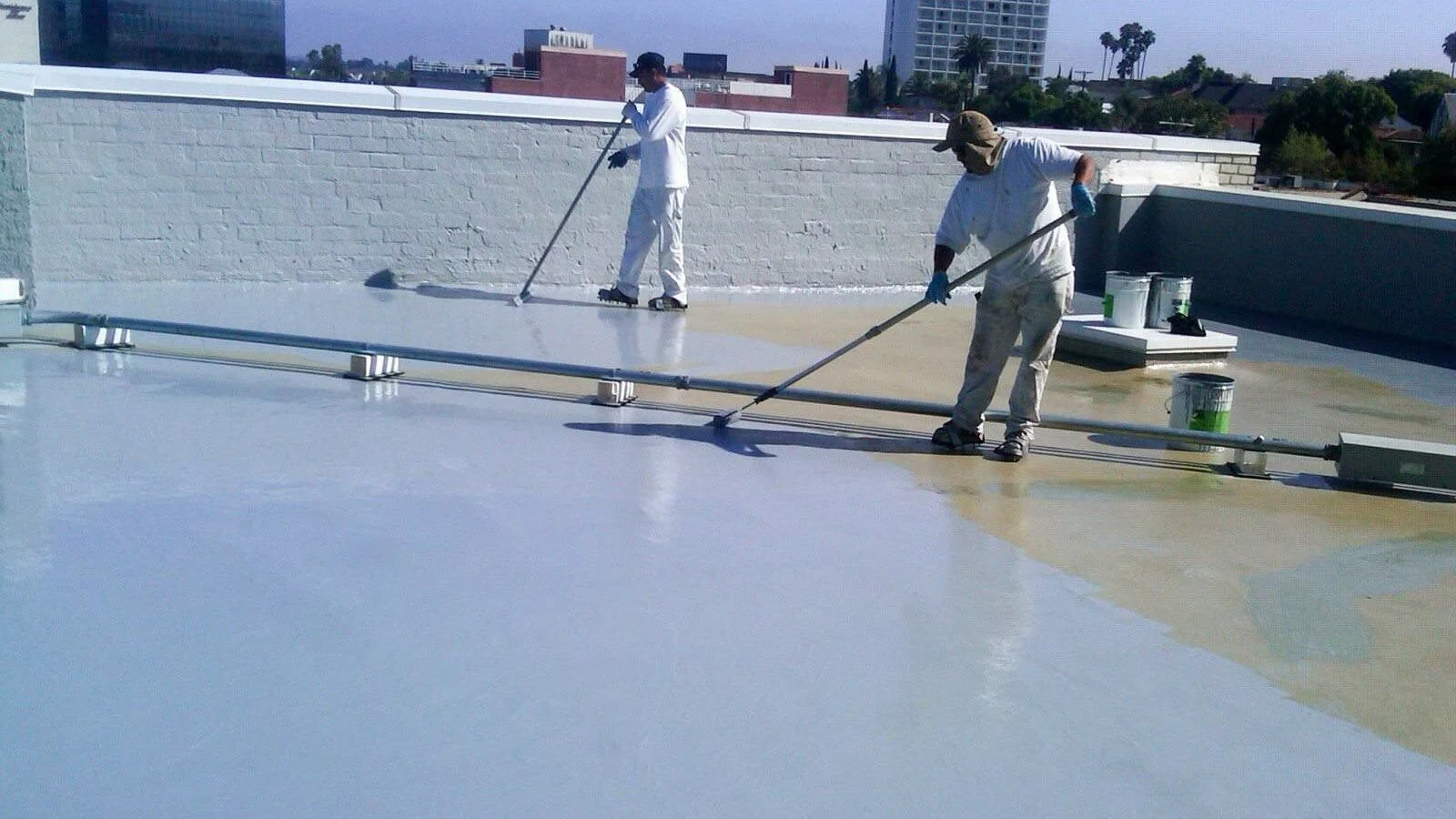
Silicone Roof Coatings in Ontario, CA
Silicone roof coating restoration for Ontario, CA commercial buildings: substrate prep, ponding-water performance, and the math against full tear-off.
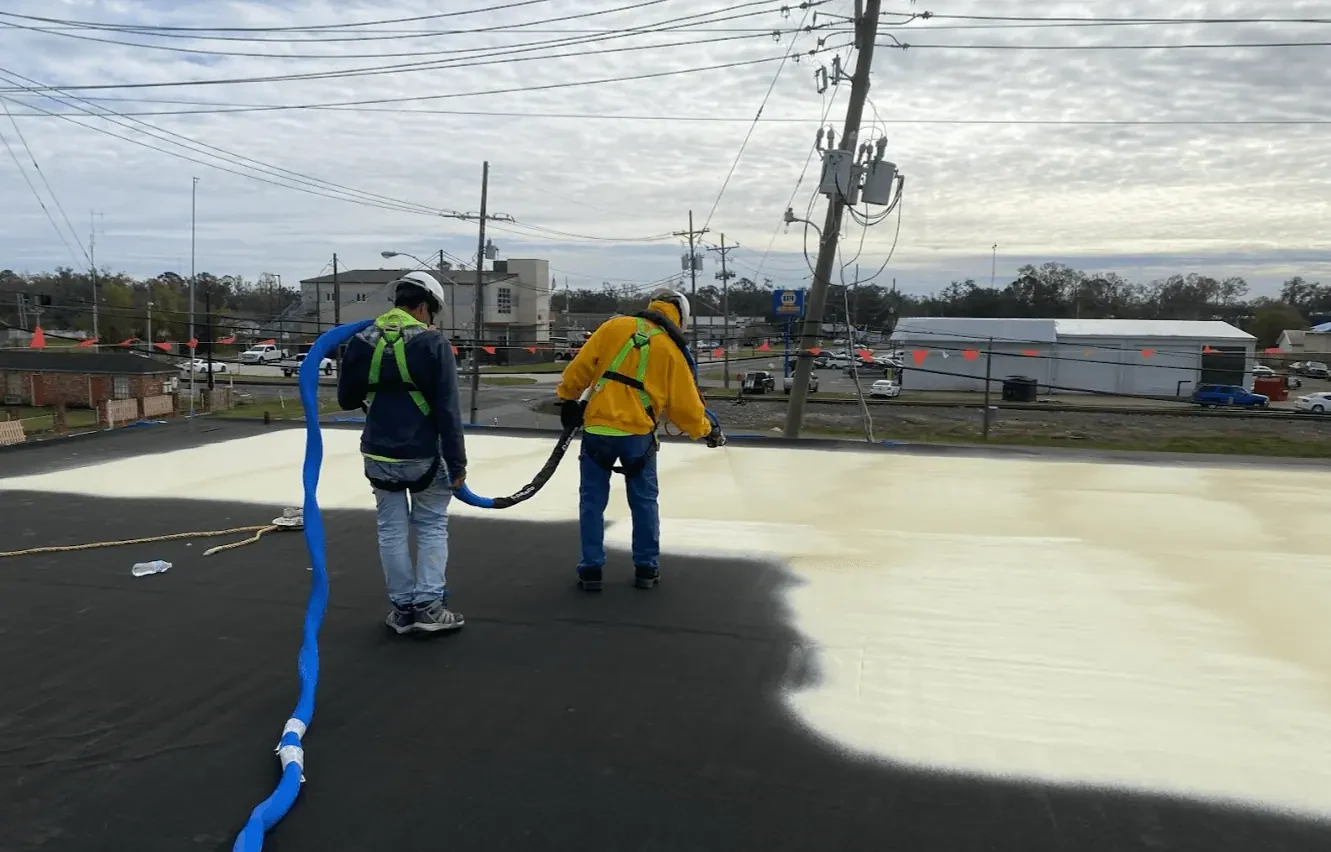
Spray Polyurethane Foam Roofing in Ontario, CA
SPF roofing for Ontario, CA buildings with dense rooftop equipment or ponding issues: application process, R-value math, and recoat maintenance cycles.