
SBS Modified Bitumen Roofing in Ontario, CA
SBS Modified Bitumen: Still the Right Call on Complex Older Roofs
Single-ply gets most of the attention on new construction, but a meaningful share of Ontario's older commercial buildings still get quoted in SBS modified bitumen, and for reasons that hold up under scrutiny. Multi-ply redundancy and application flexibility solve problems that a single membrane sheet handles less naturally, particularly on roofs with decades of additions and penetrations stacked on top of each other.
What SBS Modified Bitumen Actually Is
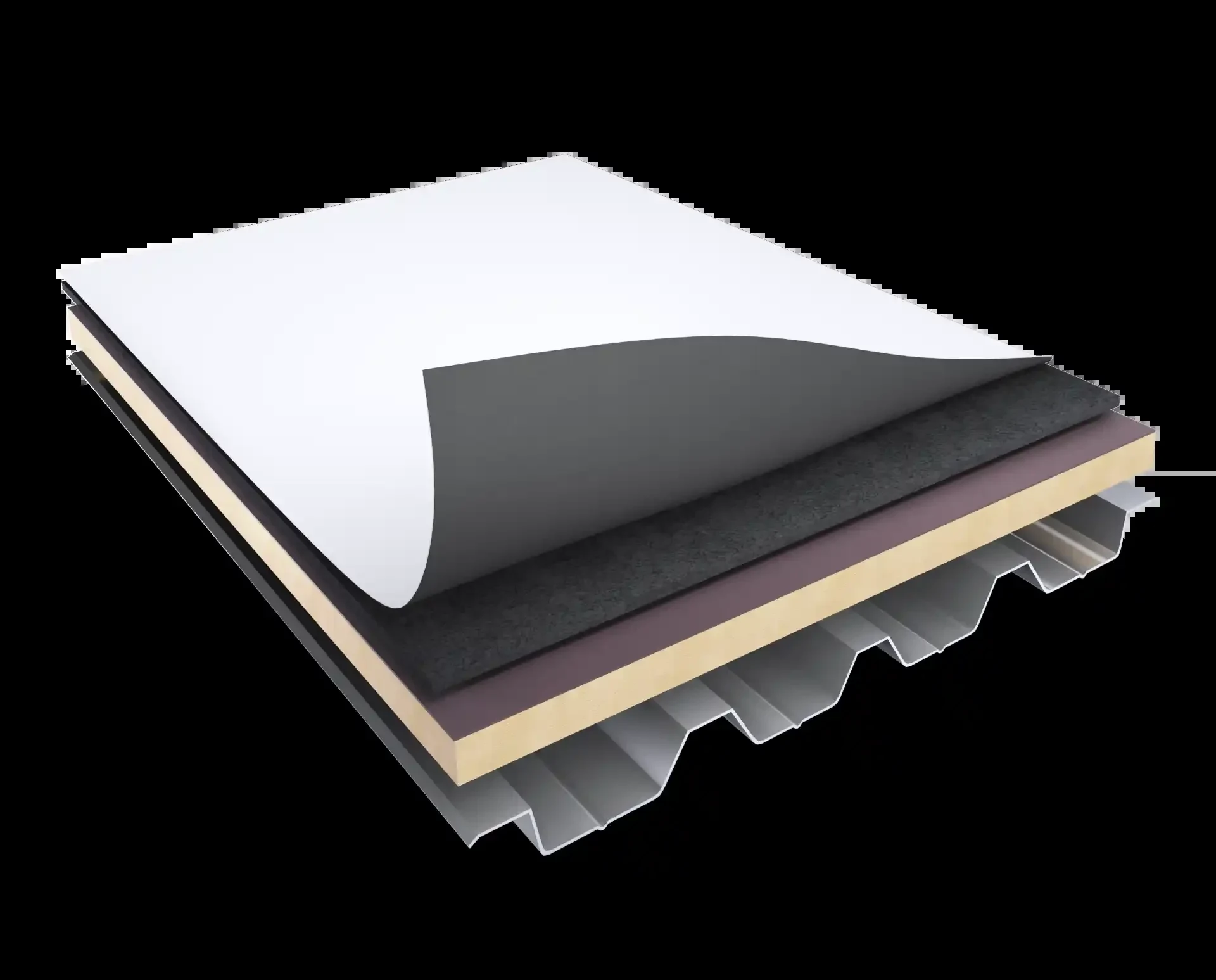
SBS stands for styrene-butadiene-styrene, a synthetic rubber polymer blended into asphalt to give the resulting sheet flexibility and elongation that plain asphalt does not have on its own. The finished product is a reinforced asphalt sheet, typically fiberglass or polyester-reinforced, installed in a base ply and a cap ply for two full layers of waterproofing rather than the single membrane thickness of TPO or PVC. That redundancy is the core argument for the system: a puncture or blister in one layer does not necessarily open a path to the deck the way a breach in a single-ply sheet can.
Cap sheets come granulated, with a mineral surface that handles UV and foot traffic without additional coating, or smooth, meant to be finished with a reflective coating afterward for Title 24 compliance on conditioned buildings.
Where This System Fits Ontario's Older Commercial Stock
We quote SBS most often on buildings from the era before single-ply membrane became standard: older retail centers along the Route 66 corridor through Upland and Montclair, downtown Ontario's older commercial blocks, and light-industrial buildings in Pomona's historic districts near the Fairplex. These roofs typically carry decades of added HVAC units, satellite mounts, sign structures, and patch repairs, and the multi-ply, hot-mopped or torch-applied installation method handles irregular decking and inconsistent penetration density better than a single heat-welded sheet does.
It also shows up as the recover system of choice on roofs already built up in asphalt, where staying in the same material family avoids compatibility issues between asphalt-based systems and thermoplastic membranes at the interface.
- Ply configuration: base sheet plus cap sheet, minimum two-layer redundancy
- Application methods: torch-applied, hot asphalt (mopped), cold adhesive, or self-adhered
- Cap sheet finish: granulated mineral surface or smooth surface with field-applied reflective coating
- Reinforcement: fiberglass or polyester scrim within each ply
- Typical warranty: 15 to 20 years depending on ply count and application method
- Best-fit roofs: older multi-penetration buildings, asphalt-based recovers, complex parapet and flashing conditions
Application Method Matters More Here Than the Membrane Does
Torch application is the fastest and often the cheapest labor method, using an open flame to melt the asphalt backing and bond the sheet. It is also the one we approach carefully on buildings near Upland and Claremont's foothill zones, where wildfire exposure and defensible-space rules make an open-flame roofing process a real consideration for the property and its neighbors, separate from the labor tradeoffs alone. On those jobs we default to cold-applied adhesive, self-adhered sheet, or hot-mopped asphalt instead, none of which introduce an open flame to the roof deck.
Hot asphalt application, the traditional built-up roofing method adapted for modified bitumen cap sheets, still gets specified on large flat commercial roofs where the crew and kettle logistics pencil out, and it produces a very durable multi-ply assembly when done correctly. Cold-adhesive and self-adhered systems trade some of that field-proven track record for faster installation and no kettle or torch on site at all, which matters on occupied retail buildings where tenants are operating below during the work.
Cost and Lifecycle Against Single-Ply
SBS modified bitumen generally costs more in labor than a comparable single-ply system because of the multi-ply application process, but the redundancy can extend service life on roofs with heavy penetration density and ongoing rooftop trade traffic, where a single membrane sheet takes more cumulative wear at the same detail points. On a clean open-field warehouse roof, single-ply usually wins on installed cost. On an older building with decades of stacked mechanical additions, the math shifts toward mod bit more often than owners expect going in.
Common Questions on SBS Modified Bitumen
Is modified bitumen outdated compared to TPO or PVC?
Not outdated, situational. It remains the better fit on roofs with heavy penetration density, irregular decking, or an existing asphalt-based system where staying in the same material family avoids interface problems at flashings and terminations.
Why avoid torch application near the foothill areas?
An open flame on the roof deck is a real fire-exposure consideration in wildfire-prone zones near Upland and Claremont's hillside edges, independent of how the manufacturer rates the product. We default to cold-applied, self-adhered, or hot-mopped methods in those areas instead.
Does a granulated cap sheet need a reflective coating for Title 24?
Standard granulated cap sheets typically do not meet the aged solar reflectance threshold on their own. Where compliance is required, we spec a smooth cap sheet with a field-applied reflective coating, or confirm an applicable code exception before finalizing the bid.
How does a two-ply system handle ponding water compared to single-ply?
Neither system is designed to tolerate standing water indefinitely, and ponding accelerates degradation on both. Where drainage is marginal, we address slope and drain capacity as part of the scope rather than relying on either membrane type to compensate for poor drainage design.
Can you recover an old built-up gravel roof with modified bitumen?
Often, yes, once a moisture survey confirms the existing insulation is dry. Staying within the asphalt-based system family for the recover generally simplifies the flashing tie-ins compared to switching to a thermoplastic membrane over an aged BUR deck.
Related
Ready to review the roof scope?
Request a Roof AssessmentProject List
60-Mil TPO Roofing in Ontario, CA
60-mil TPO spec details for Ontario, CA warehouses and retail: membrane construction, attachment options, Title 24 compliance, and 20-year lifecycle math.
80-Mil TPO Roofing in Ontario, CA
80-mil TPO for Ontario, CA logistics and solar-ready roofs: thickness-over-scrim numbers, 25 to 30-year warranties, and cost-per-year comparisons vs 60-mil.
Black EPDM Roofing in Ontario, CA
Black EPDM specs for Ontario, CA: sheet thicknesses, ballast vs. adhered attachment, Title 24 exceptions, and where rubber roofing still beats TPO on cost.
White EPDM Roofing in Ontario, CA
White EPDM for Ontario, CA commercial roofs: how the white surface is built, Title 24 compliance, adhesive-seamed detailing, and long-term reflectivity numbers.
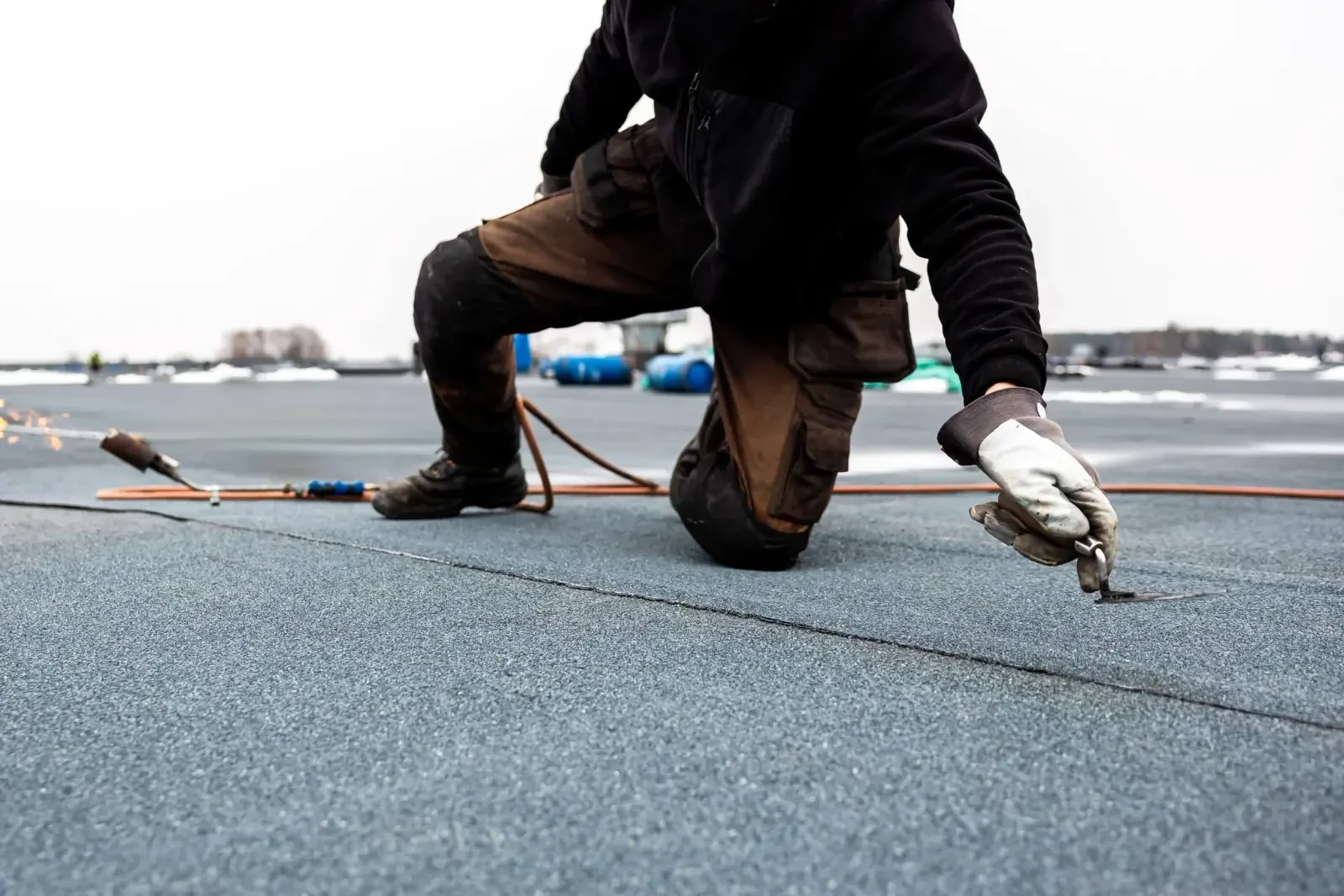
SBS Modified Bitumen Roofing in Ontario, CA
SBS modified bitumen for Ontario, CA's older commercial buildings: application methods, multi-ply redundancy, and where it still beats single-ply membrane.
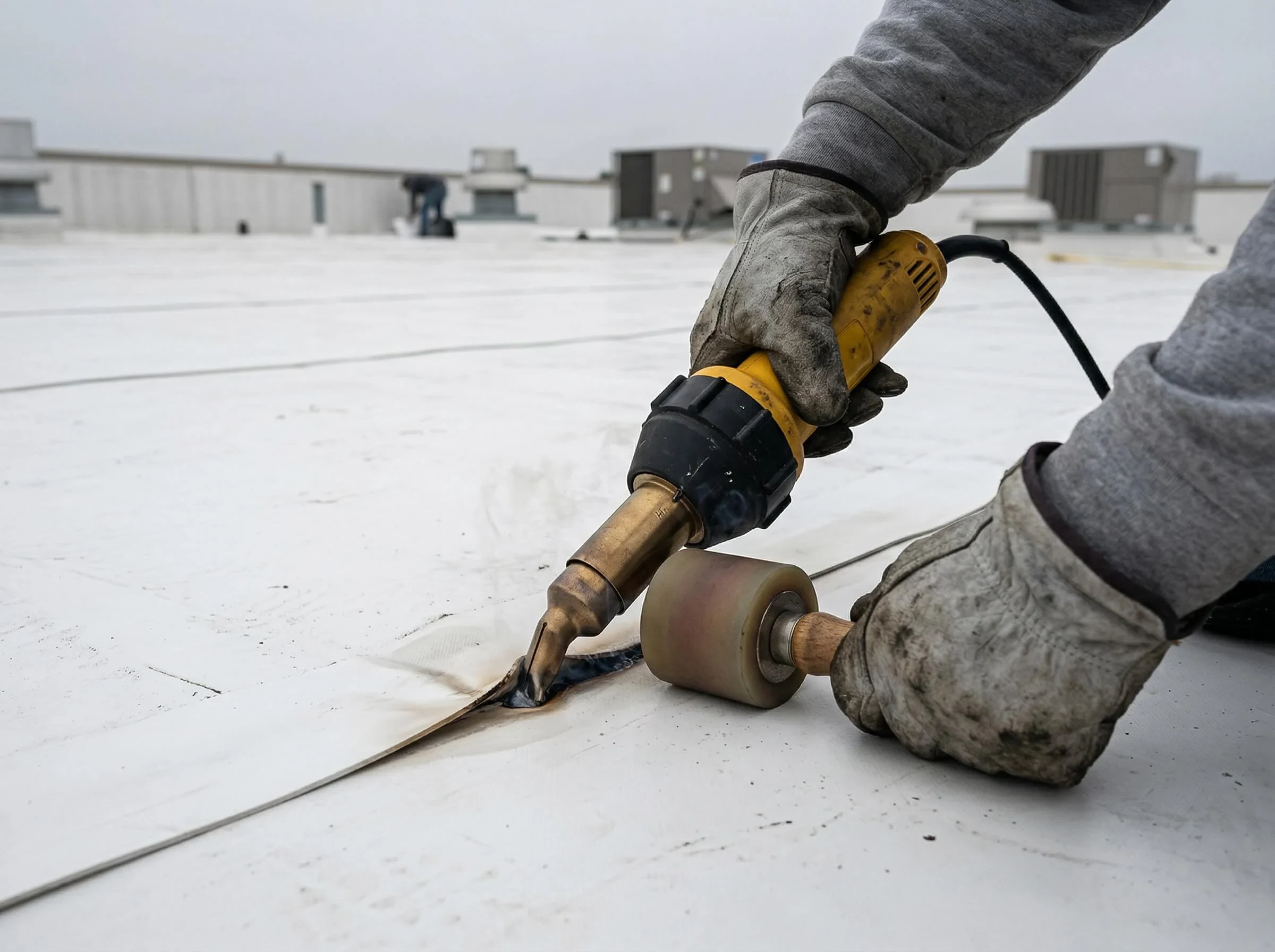
PVC Roofing Systems in Ontario, CA
PVC membrane specs for Ontario, CA restaurants, dealerships, and manufacturing roofs: grease and chemical resistance, weld parameters, and warranty terms.
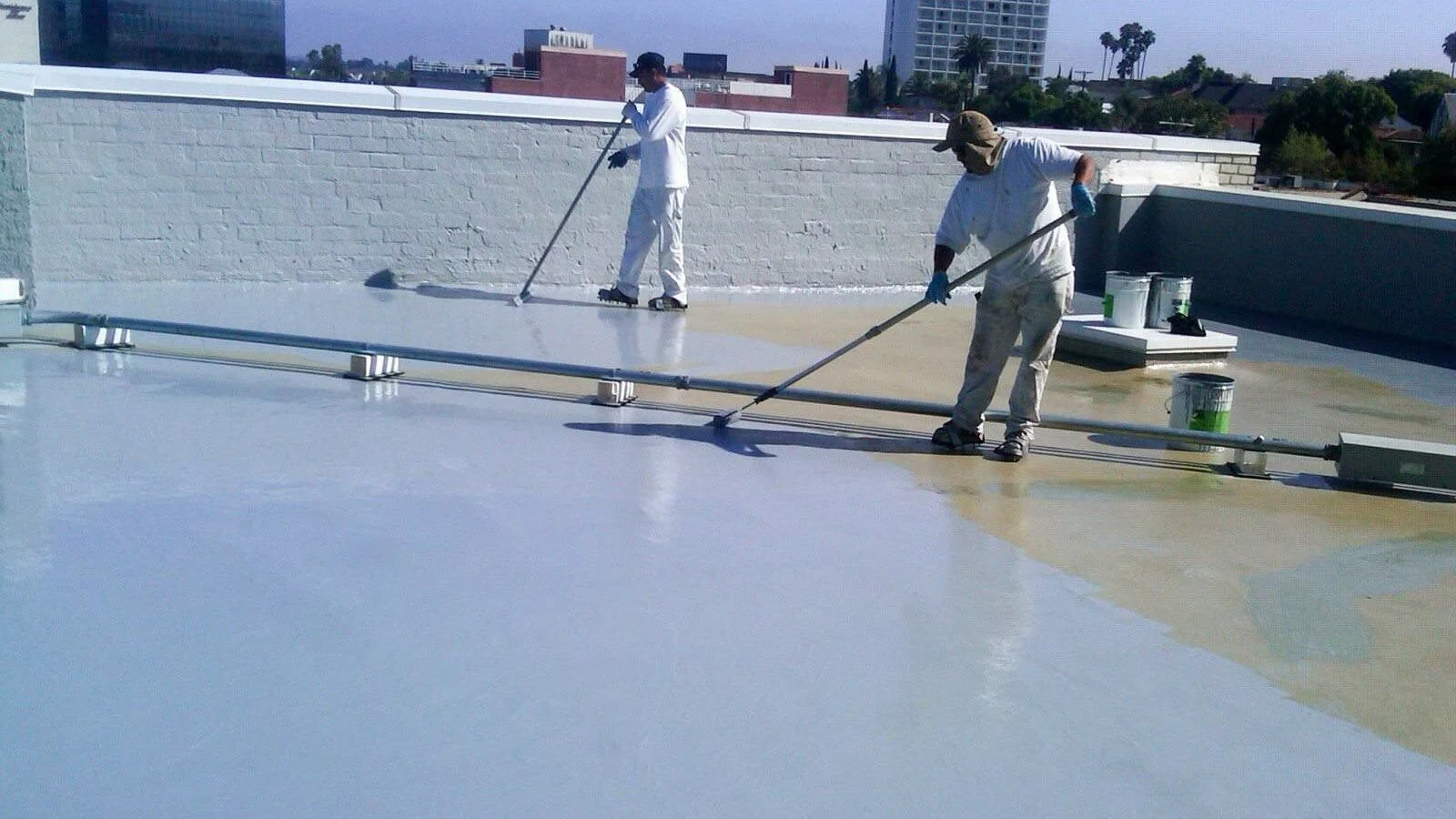
Silicone Roof Coatings in Ontario, CA
Silicone roof coating restoration for Ontario, CA commercial buildings: substrate prep, ponding-water performance, and the math against full tear-off.
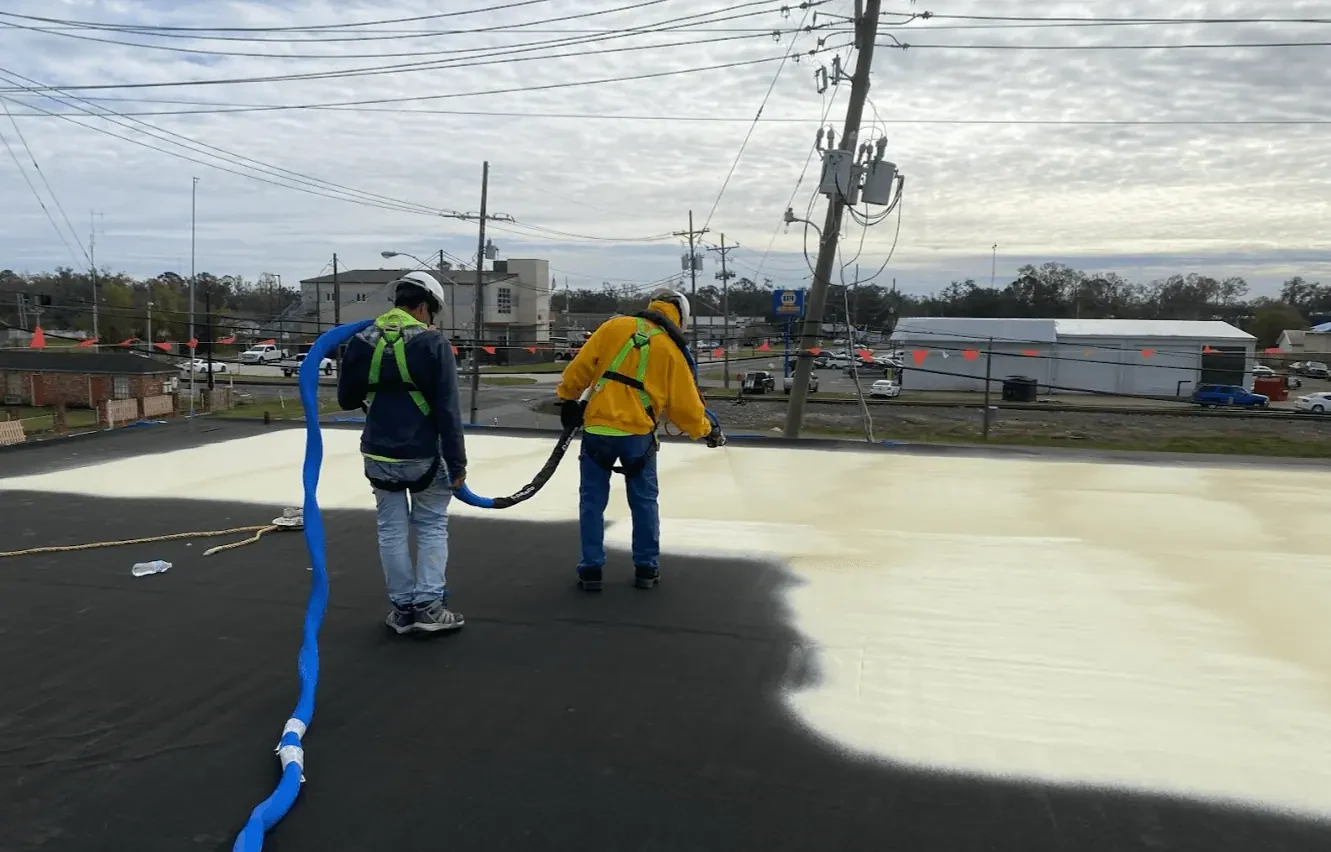
Spray Polyurethane Foam Roofing in Ontario, CA
SPF roofing for Ontario, CA buildings with dense rooftop equipment or ponding issues: application process, R-value math, and recoat maintenance cycles.