
80-Mil TPO Roofing in Ontario, CA
80-Mil TPO: Buying Membrane by the Year, Not the Square Foot
An 80-mil TPO quote almost always loses to a 60-mil quote on first cost and almost always wins on cost per year of warranty. For Ontario owners holding buildings past a decade , and for any roof that will carry solar , that second number is the one we tell them to underwrite.
The Extra 20 Mils Goes Where It Counts
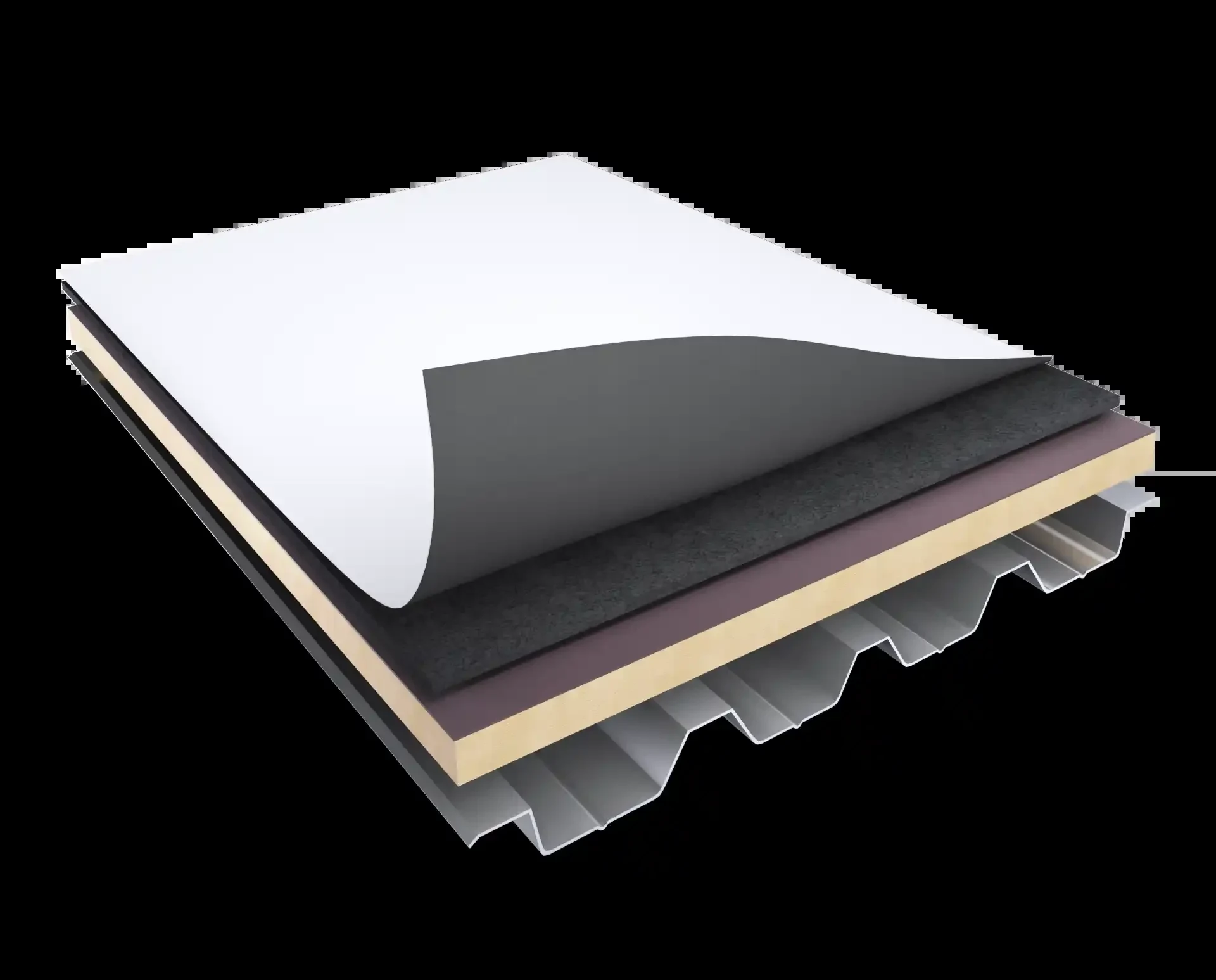
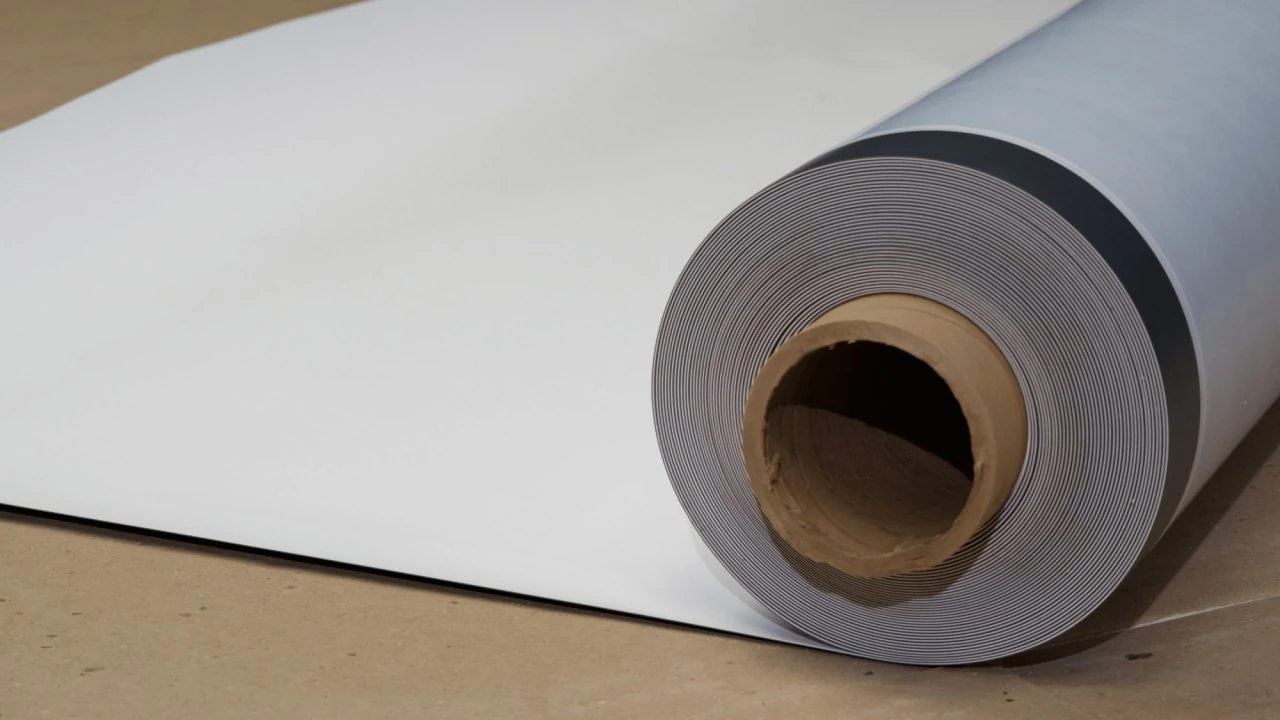
Upgrading from 60 to 80 mil does not spread the added thickness evenly through the sheet. The scrim stays in roughly the same position, so nearly all of the gain lands in the weathering ply above it , thickness over scrim moves from the low 20s to the low-to-mid 30s in mils, an increase of roughly half again. Since UV degradation, heat aging, and mechanical abuse all attack from the top down, that wear layer is the entire reason an 80-mil sheet carries a 25-or-30-year warranty while the 60 tops out at 20.
Puncture and tear numbers move with it. On roofs where hail is rare but dropped tools, screws underfoot, and racking hardware are constant , which describes every solar-equipped distribution roof in the Inland Empire , the thicker top ply is the difference between a scuff and a service call.
Why This Spec Fits Ontario's Long-Hold Logistics Stock
The buildings going up in Ontario Ranch and the Meredith International Centre area are not merchant deals anymore; a growing share are build-to-suits and institutional acquisitions underwritten on 15-to-30-year horizons. Amazon, UPS, and the food distributors operating around ONT run their rooftop equipment hard, their service traffic is weekly, and their asset managers ask for warranty terms that match their hold. That is the 80-mil buyer.
The other driver is photovoltaics. California's Title 24 requires solar-ready zones on most new commercial construction, and a lot of Ontario owners are executing on those zones now. Re-roofing under an operating array costs multiples of the original roof work because panels must be lifted and re-set. The membrane under a 25-year array should carry at least a 25-year warranty, full stop. We will not put a 20-year roof under a 25-year power purchase agreement, and the manufacturers we work with generally will not warrant that configuration favorably either.
- Thickness over scrim: roughly 32 to 36 mils, versus 21 to 24 on a 60-mil sheet
- Warranty terms available: 25 and 30 years NDL from the major manufacturers
- Typical upcharge over 60-mil: membrane cost only , labor, insulation, and edge metal are unchanged
- Puncture resistance: meaningfully higher, the working margin for solar O&M traffic
- Title 24 cool-roof compliance: identical to 60-mil white TPO, 0.63 aged reflectance threshold cleared
- Best-fit buildings: build-to-suit logistics, cold storage, big-box retail, arenas and venues, any PV host roof
Installation: Same Methods, Tighter Details
Attachment options mirror the 60-mil playbook , mechanically attached in the seams, induction-welded plates, or fully adhered , sized to ASCE 7 uplift pressures with enhanced corner and perimeter schedules for Santa Ana wind exposure. Two practical differences show up on site. First, an 80-mil sheet is stiffer, so flashings, pipe boots, and inside corners take more care and more time; we budget the detail labor accordingly rather than letting crews rush the exact work the longer warranty depends on. Second, welding parameters change: the thicker bottom ply wants slightly more heat or slower gun speed, and our foremen run test welds at the start of every shift and after every major temperature swing, which in an Ontario summer means at least twice a day.
For 30-year warranty configurations, manufacturers commonly require a cover board , usually half-inch high-density polyiso or gypsum , between insulation and membrane. It adds cost, and it is worth it: the cover board spreads point loads, improves hail and traffic performance, and firms up the welding substrate.
The Lifecycle Spreadsheet, Run Honestly
Take the same 200,000-square-foot Ontario warehouse and price it both ways. The 80-mil system carries a single-digit percentage premium on total installed cost, because membrane is only one line item among tear-off, insulation, cover board, edge metal, and labor. Divide each total by its warranty term and the 80-mil assembly is cheaper per year in almost every configuration we run. Add avoided costs , no mid-life recoat needed to reach year 25, no panel-lift re-roof under solar , and the long-hold case closes itself.
The honest counter-case: if the exit is inside 10 years and there is no PV plan, the premium buys warranty years the current owner will never use, and buyers do not reliably pay for remaining roof life. That owner should read our 60-mil TPO page instead. We put both numbers in front of every client because the right answer is a hold-period answer, not a roofing answer.
Straight Answers on 80-Mil TPO
Is 80-mil TPO overkill for a standard warehouse?
For a short-hold spec building, usually yes. For an owner-user or institutional hold, no , the premium is small against total project cost and the warranty term matches the underwriting. The membrane is not the question; the hold period is.
Does the 80-mil sheet handle Ontario heat better than 60-mil?
Both use the same polymer and weathering package, so they age at the same rate per mil , the 80 simply has more sacrificial thickness above the scrim to give up. In a market with our UV and surface temperatures, that reserve is exactly what you are buying.
Do we need 80-mil under rooftop solar, or is that a sales pitch?
Manufacturers will quote you the same logic we do: the roof warranty should meet or exceed the array's service life, and 25-to-30-year terms on TPO start at 80 mil for most product lines. The arithmetic of lifting an array to re-roof at year 18 settles the argument without any pitch from us.
What does a 30-year warranty actually require beyond thicker membrane?
Typically a cover board, enhanced perimeter fastening, premium flashing details at every penetration, and a manufacturer inspection at completion. Some programs also require documented maintenance. We build all of it into the bid so the number you approve is the number that gets the certificate issued.
Can 80-mil TPO go down as a recover over our existing roof?
Yes, under the same rules as any recover: one existing roof maximum, verified dry by moisture scan and core cuts, and adequate fastener pull-out values in the deck. The thicker sheet actually recovers well because it bridges minor substrate irregularities. The scan comes first; we do not warranty guesses.
Related
Ready to review the roof scope?
Request a Roof AssessmentProject List
60-Mil TPO Roofing in Ontario, CA
60-mil TPO spec details for Ontario, CA warehouses and retail: membrane construction, attachment options, Title 24 compliance, and 20-year lifecycle math.
80-Mil TPO Roofing in Ontario, CA
80-mil TPO for Ontario, CA logistics and solar-ready roofs: thickness-over-scrim numbers, 25 to 30-year warranties, and cost-per-year comparisons vs 60-mil.
Black EPDM Roofing in Ontario, CA
Black EPDM specs for Ontario, CA: sheet thicknesses, ballast vs. adhered attachment, Title 24 exceptions, and where rubber roofing still beats TPO on cost.
White EPDM Roofing in Ontario, CA
White EPDM for Ontario, CA commercial roofs: how the white surface is built, Title 24 compliance, adhesive-seamed detailing, and long-term reflectivity numbers.
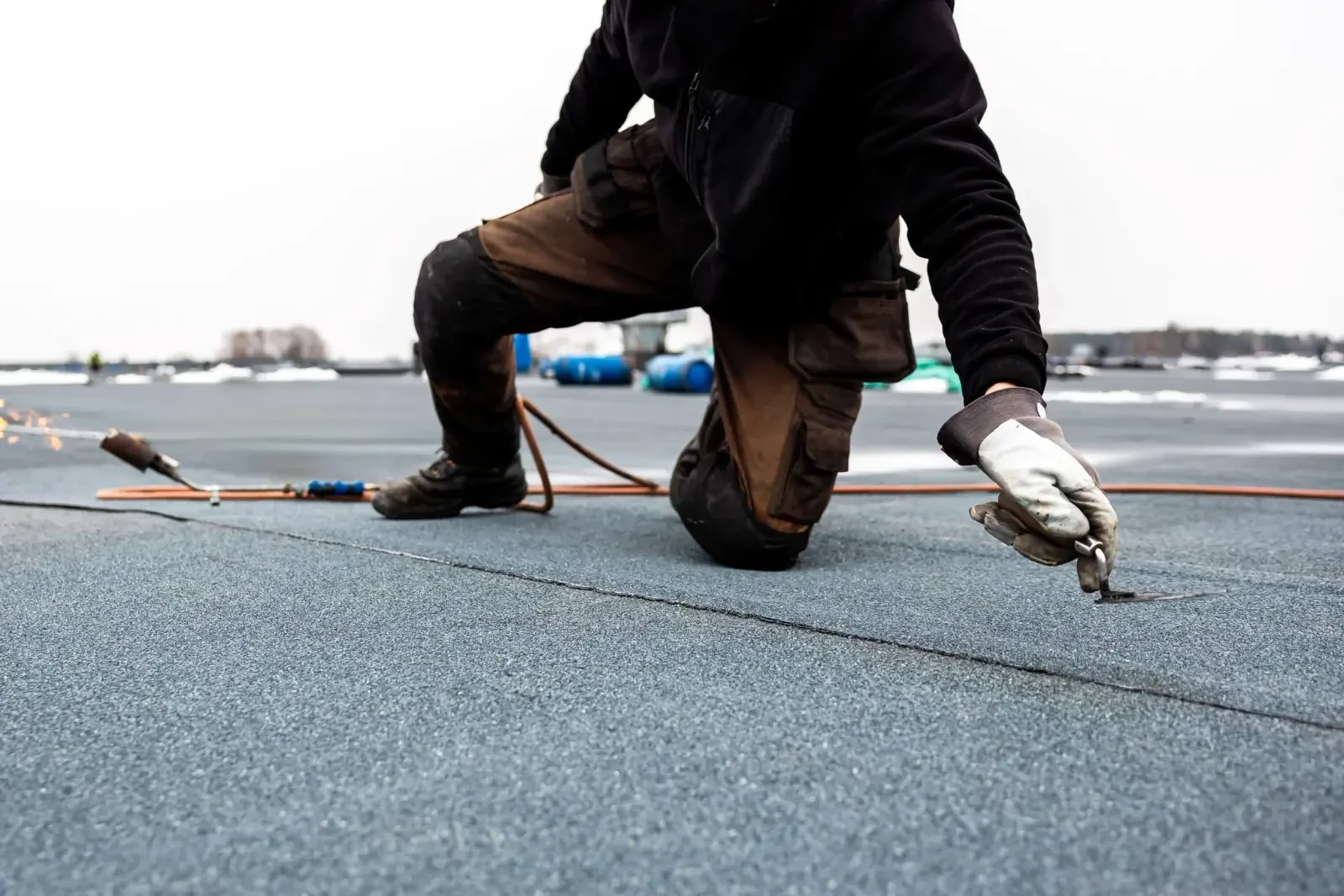
SBS Modified Bitumen Roofing in Ontario, CA
SBS modified bitumen for Ontario, CA's older commercial buildings: application methods, multi-ply redundancy, and where it still beats single-ply membrane.
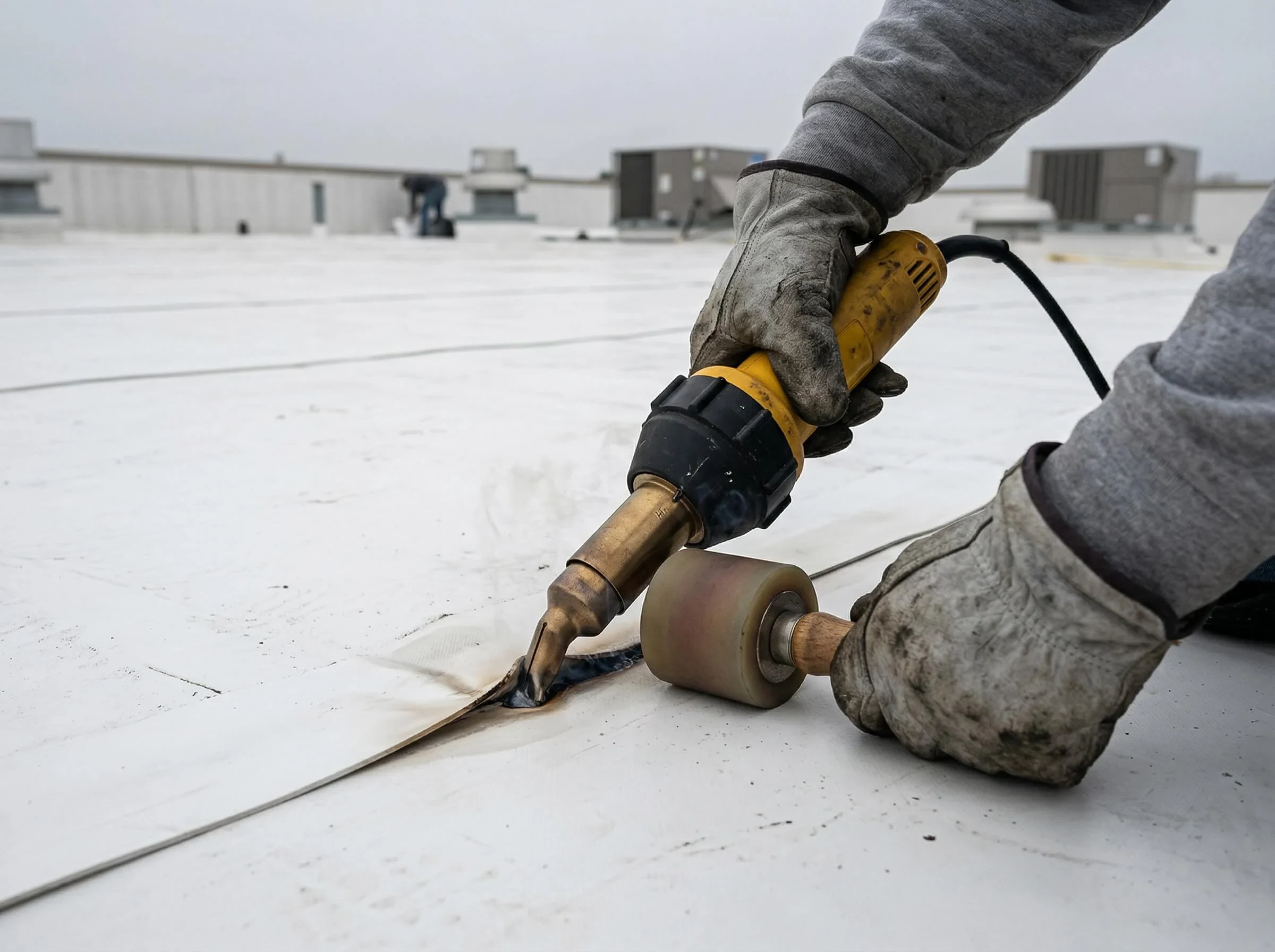
PVC Roofing Systems in Ontario, CA
PVC membrane specs for Ontario, CA restaurants, dealerships, and manufacturing roofs: grease and chemical resistance, weld parameters, and warranty terms.
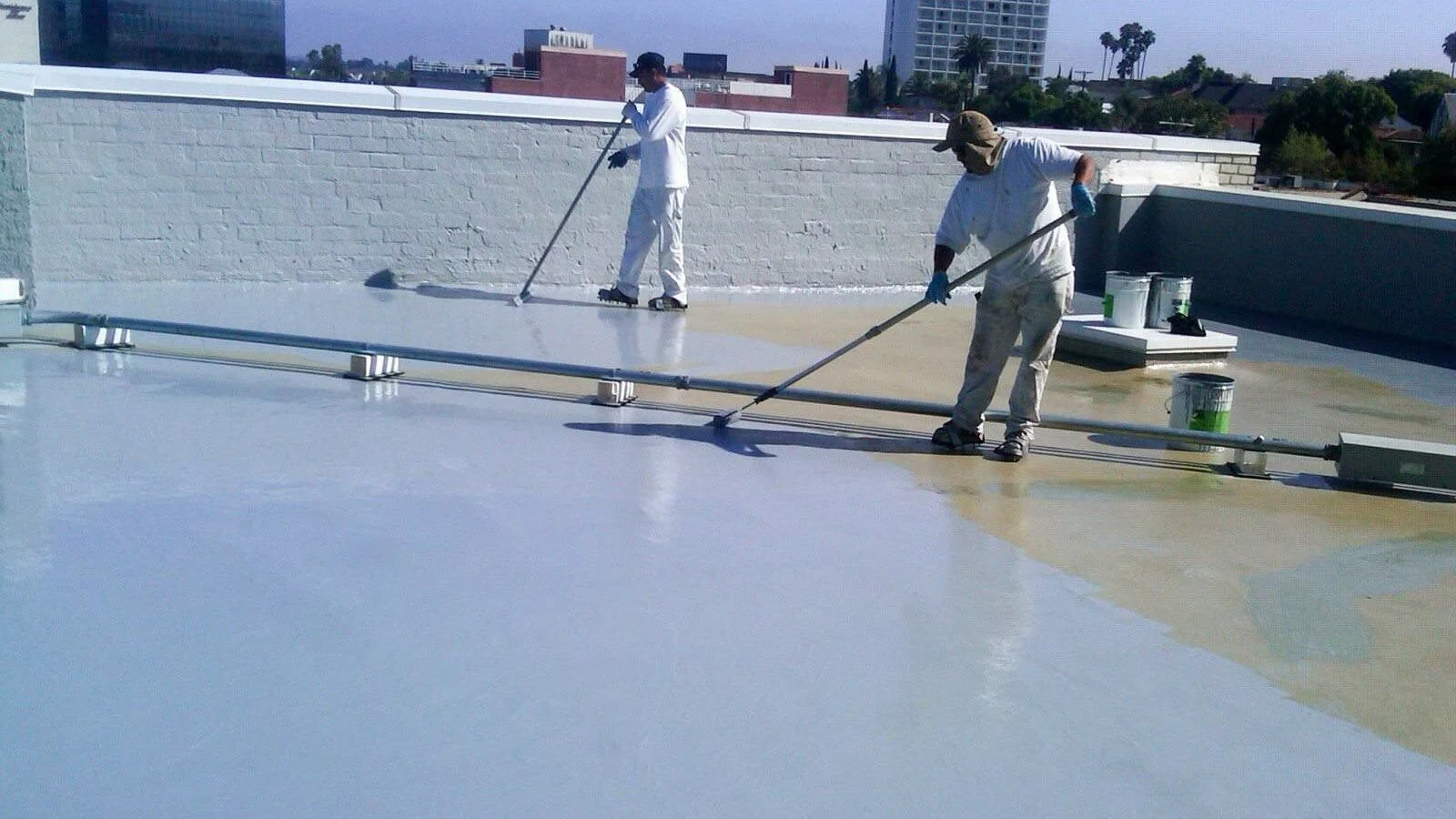
Silicone Roof Coatings in Ontario, CA
Silicone roof coating restoration for Ontario, CA commercial buildings: substrate prep, ponding-water performance, and the math against full tear-off.
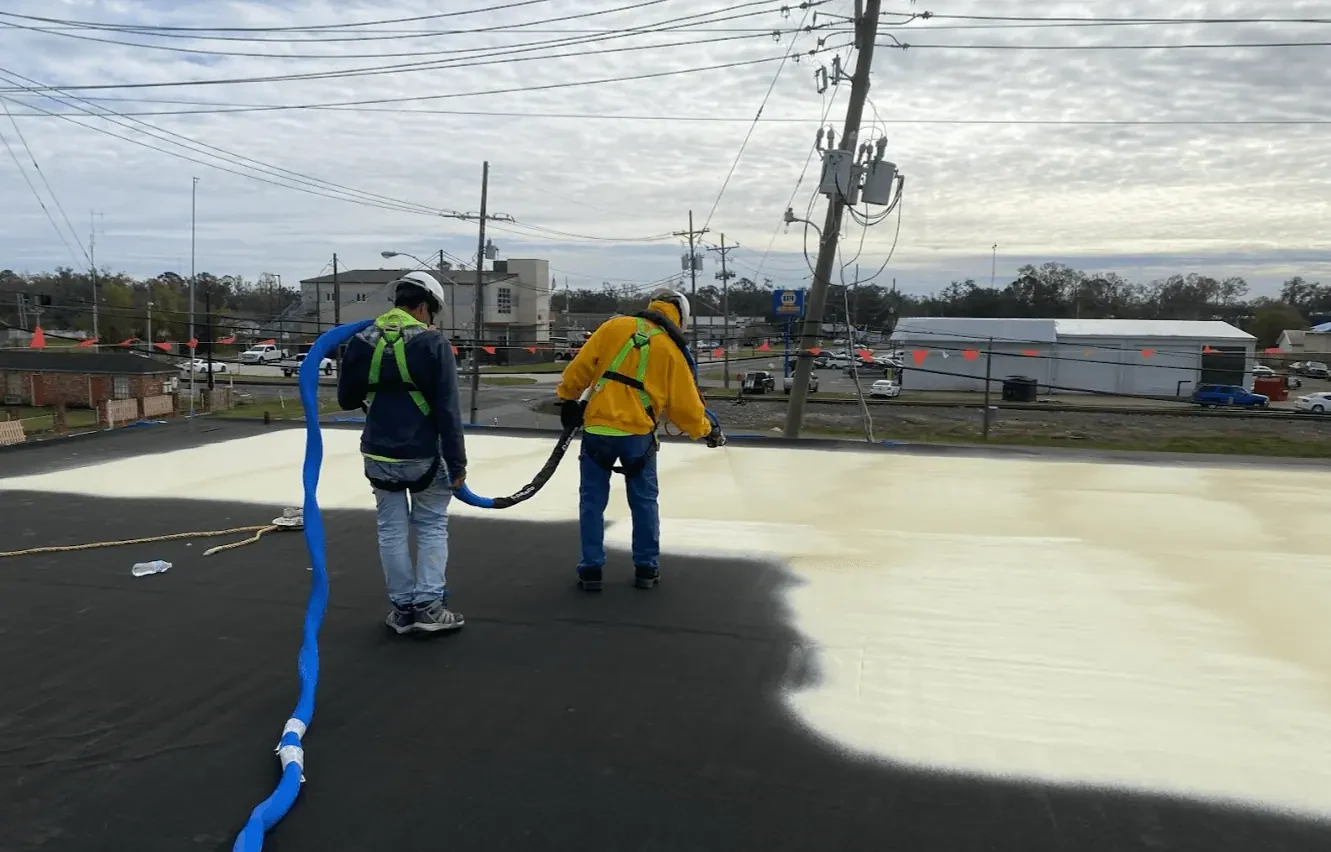
Spray Polyurethane Foam Roofing in Ontario, CA
SPF roofing for Ontario, CA buildings with dense rooftop equipment or ponding issues: application process, R-value math, and recoat maintenance cycles.