Black EPDM Roofing in Ontario, CA
Black EPDM: Why the Least Flashy Membrane Still Gets Specified
Every logistics park in Ontario runs on white TPO, and for good reason under Title 24. But black EPDM has not gone away. It is still the sheet we quote on older tilt-up buildings, mechanical screen decks, and back-of-house roofs where budget and puncture toughness matter more than solar reflectance. Knowing where the numbers still favor black rubber keeps owners from paying for reflectivity credit they cannot actually use.
What's Actually in a Black EPDM Sheet
EPDM stands for ethylene propylene diene monomer, a synthetic rubber compound vulcanized under heat so the sheet cross-links into a single continuous polymer rather than staying a laminate of layers like TPO or PVC. That single-polymer structure is why EPDM handles thermal movement and UV exposure differently than the thermoplastics: there is no scrim-protected wear layer to track, no thickness-over-scrim math. The whole sheet ages as one material.
We quote EPDM in 45, 60, and 90-mil thicknesses. The 90-mil sheet is worth specifying on any roof with foot traffic near mechanical units or racking equipment, since the extra material buys tear resistance more than it buys warranty term. EPDM warranty length tracks seam quality and flashing detail more than sheet gauge.
Where Black EPDM Still Pencils Out in the Inland Empire
Ontario's newest logistics buildings are almost entirely white TPO, but the market carries a deep stock of older tilt-up and steel-frame buildings around Guasti, the Ontario Airport area, and the light-manufacturing streets near Mira Loma's historic warehouse district. Many were built or re-roofed before Title 24's cool-roof mandate reached this building class, and a straight recover with black EPDM is often the lowest first-cost option when the work is not adding conditioned floor area or tripping a reflectivity trigger under the current code cycle.
The other place black wins is ballasted assemblies over unconditioned space: mechanical penthouses, equipment screens, and canopy roofs with no occupied space underneath to cool. We also see it on older commercial buildings along the rail-served corridors near Jurupa Valley, where owners run lean capital budgets and the roof's job is to shed water for another decade, not chase a reflectance credit.
- Sheet thicknesses: 45, 60, and 90 mil, non-reinforced rubber
- Attachment methods: ballasted with river rock or paver, mechanically fastened, or fully adhered
- Seaming: factory or field-applied splice tape, or liquid seam adhesive on older field practices
- Typical warranty: 20 years NDL on adhered or mechanically fastened systems with proper flashing detail
- Best-fit roof types: unconditioned mechanical decks, ballasted low-slope roofs, budget-driven recovers
- Title 24 note: black EPDM does not meet aged cool-roof reflectance without an approved exception
Ballast, Wind, and the Santa Ana Problem
Ballasted EPDM is the cheapest installed system per square foot because there is no adhesive layer and no mechanical fastening pattern to engineer across the field. The membrane floats, held down by stone or paver sized to the wind uplift math for the site. That math matters more here than in most markets: Santa Ana wind events funnel through the Cajon Pass and hit the Ontario-Rancho Cucamonga corridor with gusts that regularly clear 50 miles per hour, and ballast weight has to be sized to the corner and perimeter zones, well above the field average. We do not put ballasted systems on parapet-light buildings in this wind exposure without running that calculation first.
Fully adhered or mechanically fastened black EPDM sidesteps the ballast-weight question entirely, and it is what we spec on any roof where structural loading is already tight , which describes a fair number of older tilt-up buildings never designed to carry stone ballast in the first place.
The Heat-Load Tradeoff Owners Should See in Writing
A black membrane absorbs solar load that a white membrane reflects, and in an Inland Empire summer that shows up directly in rooftop-unit runtime. We do not sell black EPDM as a like-for-like swap for white TPO on any conditioned building without walking the owner through that tradeoff on the estimate itself. Where it still makes sense , unconditioned space, budget-constrained recovers, roofs with one ownership cycle of life left , the lower installed cost outweighs the added cooling load. Where it does not, we quote white EPDM or TPO instead and put both numbers side by side.
Repair and Recover on Existing Black EPDM
A large share of our EPDM work in this market is repair and partial recover on roofs installed in the 1990s and 2000s, before white membrane became the default. Splice failure at the seams, not membrane failure in the field, is the most common problem we find. The sheet itself is often still sound at 20-plus years while the tape or adhesive at the laps has given out. We probe every seam on an EPDM inspection before recommending full replacement, since a seam-repair program can add real years to a membrane that still has field life left in it.
Straight Answers on Black EPDM
Is black EPDM still code-compliant in Ontario?
It depends on the building. Title 24's cool-roof requirement applies to most new low-slope commercial reroofing, but there are recognized exceptions for unconditioned space and certain roof areas below a size threshold. We confirm the applicable exception before quoting black membrane on any permitted job.
How does EPDM compare to TPO on cost per square foot?
Ballasted black EPDM is typically the least expensive fully engineered low-slope system we install, largely because ballast eliminates fastener and adhesive labor. Mechanically attached or adhered EPDM runs closer to TPO pricing once flashing and detail labor, which both systems require equally, gets added in.
Does black EPDM last as long as white TPO in this climate?
Field life is comparable when both are installed and maintained correctly. EPDM's failure mode tends to show up at seams, while TPO's shows up more often at the weathering ply. The heat-load difference affects the building's energy bill more than it affects either membrane's own service life.
Can you install black EPDM over an existing built-up roof?
Sometimes, if a moisture survey confirms the existing insulation is dry and the deck can carry the added dead load. More often we tear off the old gravel-surfaced cap sheet first. We do not recover over wet insulation regardless of which membrane goes on top.
What's the biggest maintenance issue on older EPDM roofs?
Seam splice failure, almost always. Annual inspection that probes lap seams and reseals any lifting tape catches the problem before water tracks under the field membrane and surfaces as a leak nowhere near where it actually entered.
Related
Ready to review the roof scope?
Request a Roof AssessmentProject List
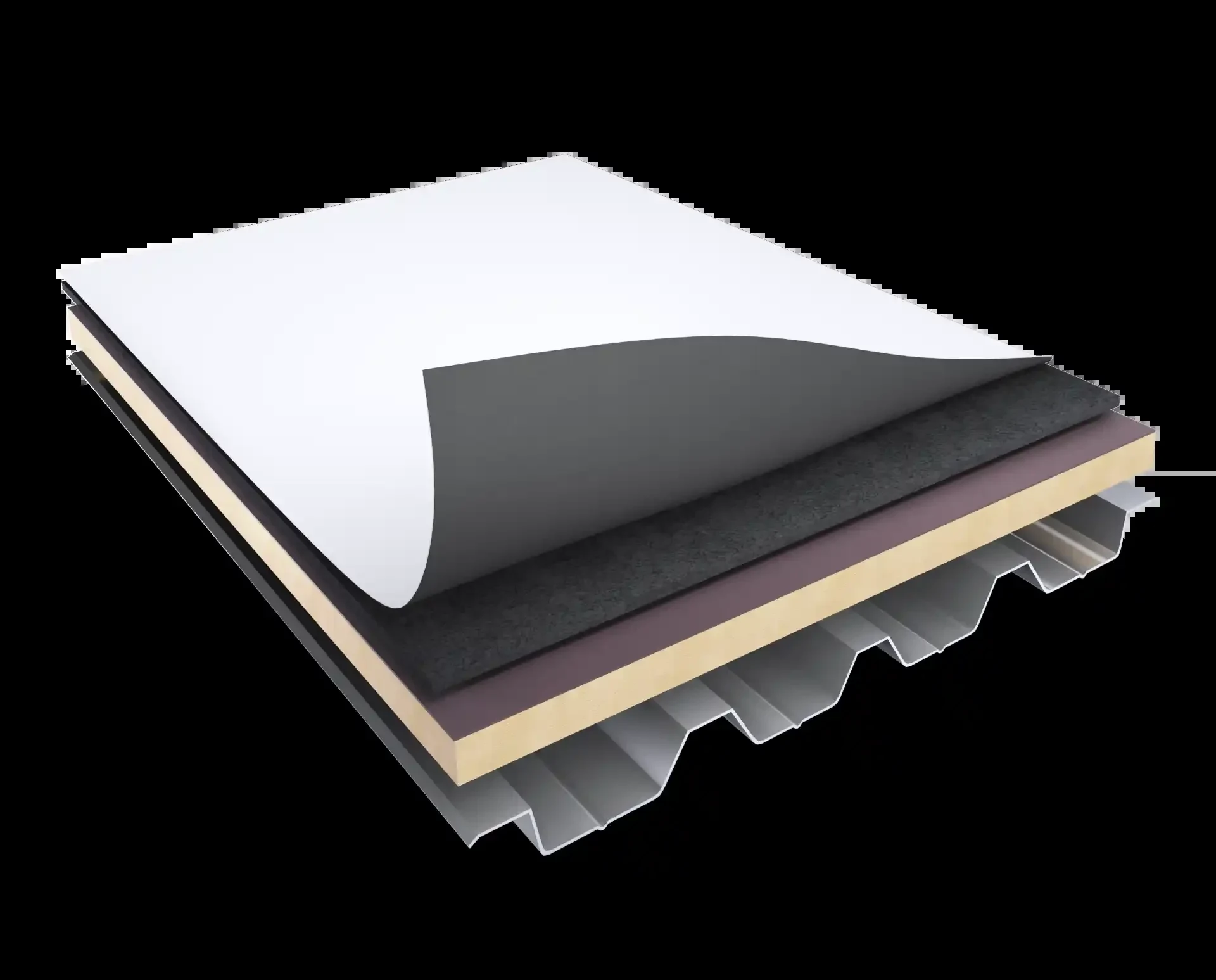
60-Mil TPO Roofing in Ontario, CA
60-mil TPO spec details for Ontario, CA warehouses and retail: membrane construction, attachment options, Title 24 compliance, and 20-year lifecycle math.
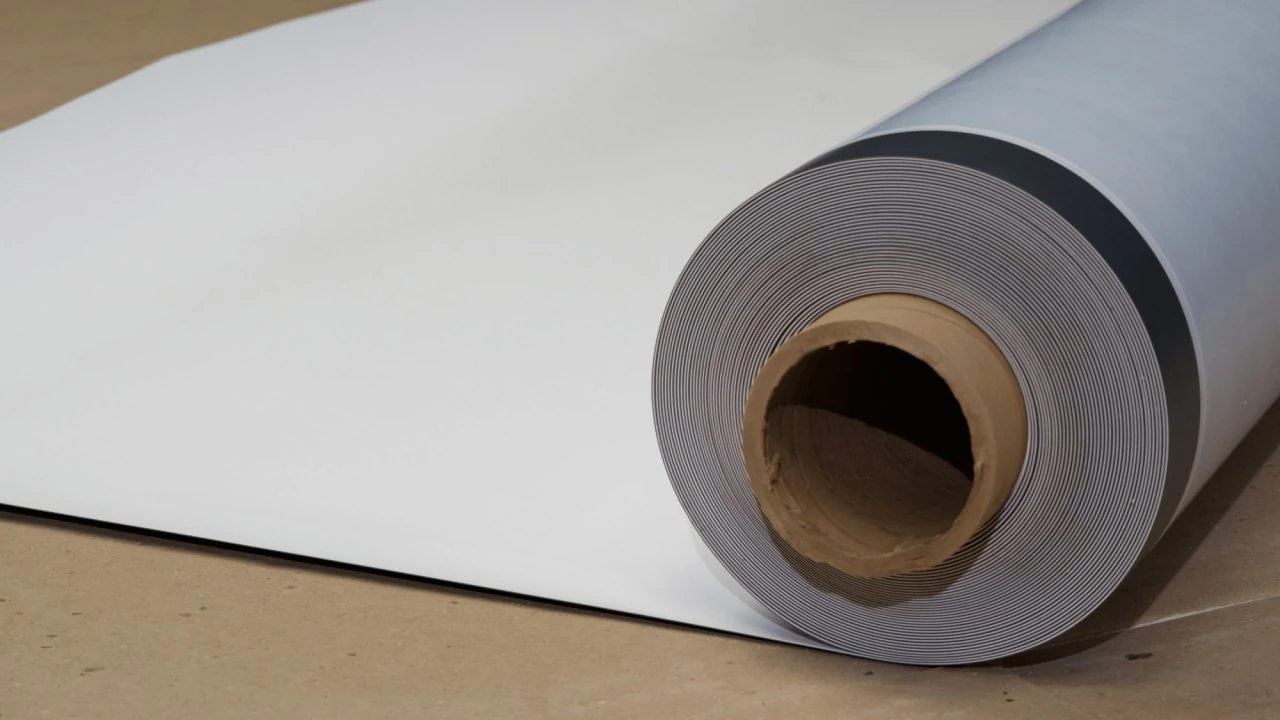
80-Mil TPO Roofing in Ontario, CA
80-mil TPO for Ontario, CA logistics and solar-ready roofs: thickness-over-scrim numbers, 25 to 30-year warranties, and cost-per-year comparisons vs 60-mil.
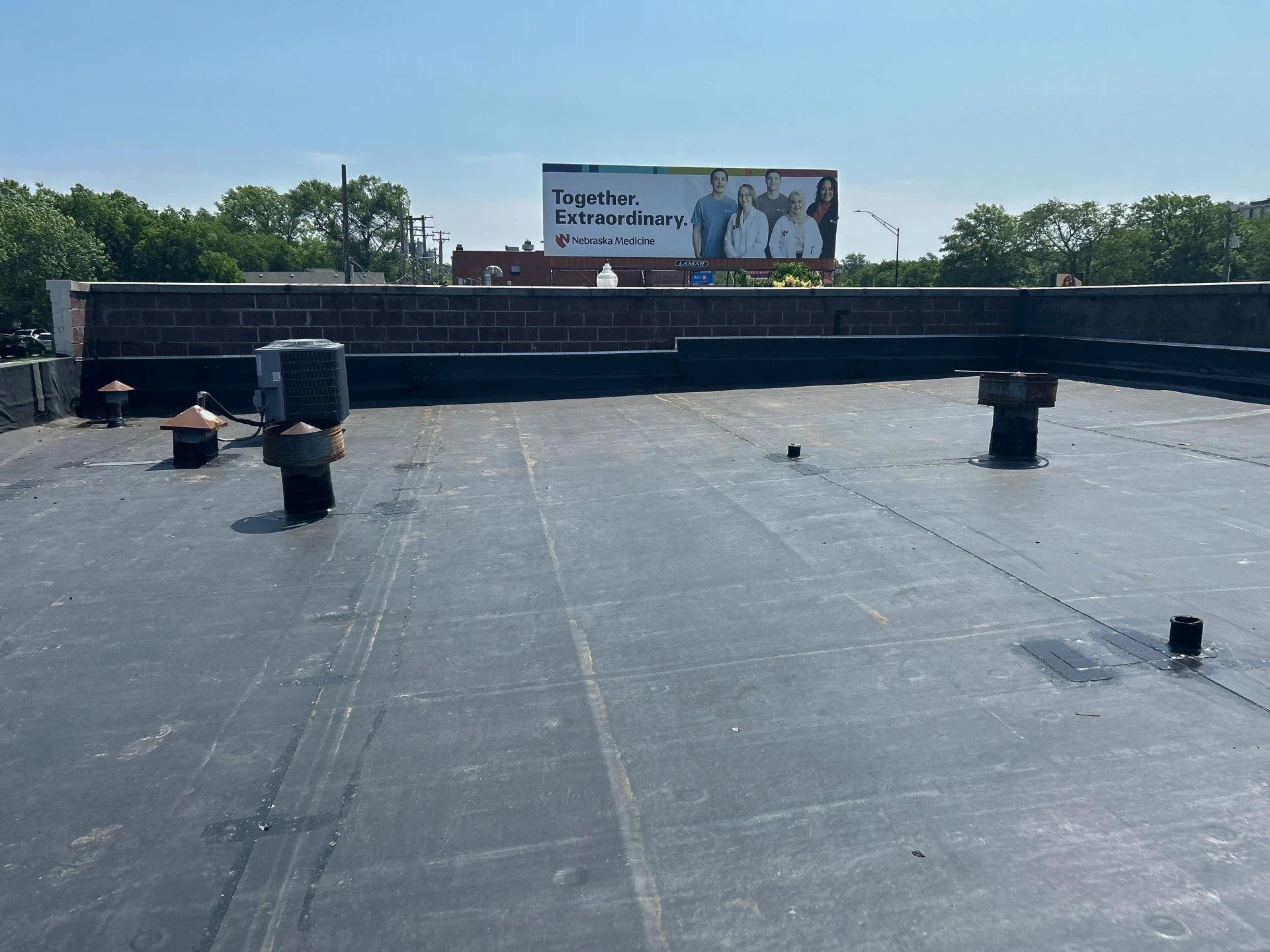
Black EPDM Roofing in Ontario, CA
Black EPDM specs for Ontario, CA: sheet thicknesses, ballast vs. adhered attachment, Title 24 exceptions, and where rubber roofing still beats TPO on cost.
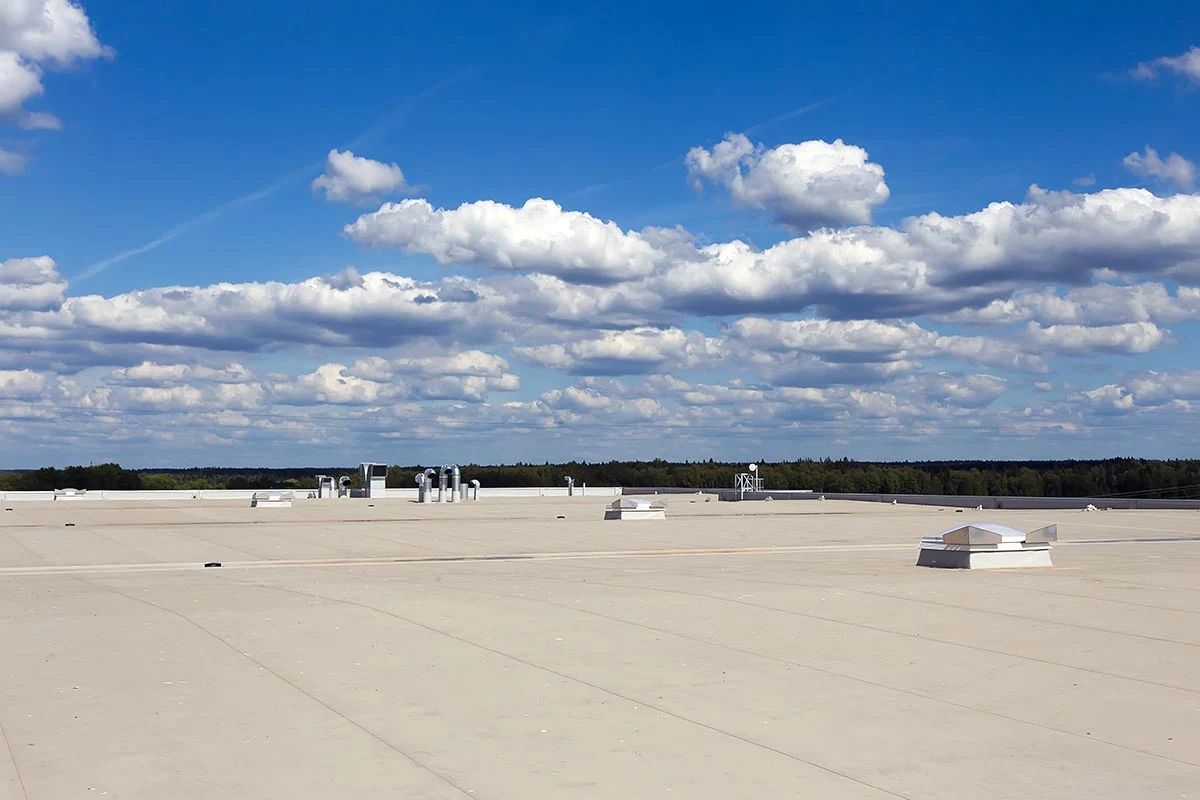
White EPDM Roofing in Ontario, CA
White EPDM for Ontario, CA commercial roofs: how the white surface is built, Title 24 compliance, adhesive-seamed detailing, and long-term reflectivity numbers.
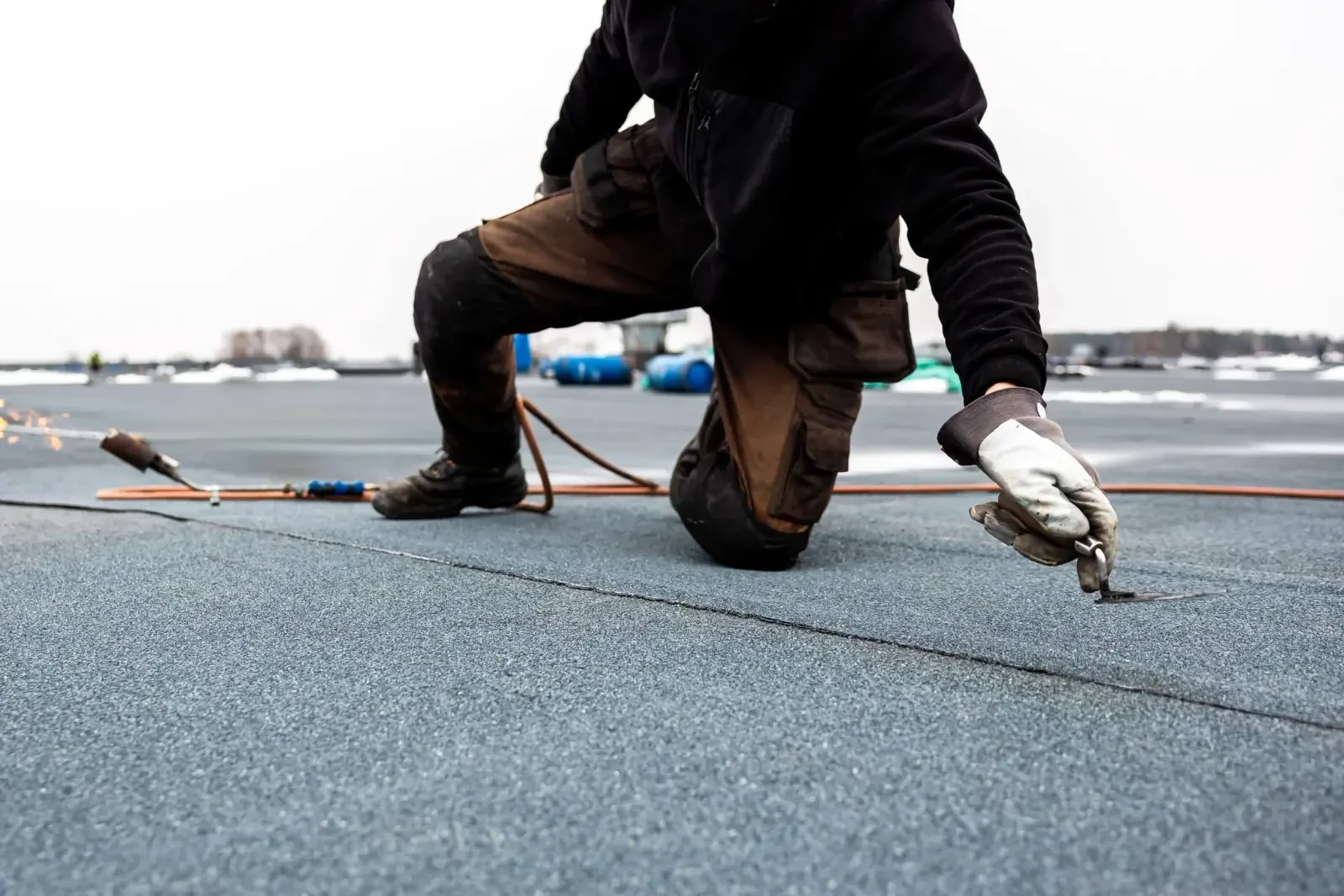
SBS Modified Bitumen Roofing in Ontario, CA
SBS modified bitumen for Ontario, CA's older commercial buildings: application methods, multi-ply redundancy, and where it still beats single-ply membrane.
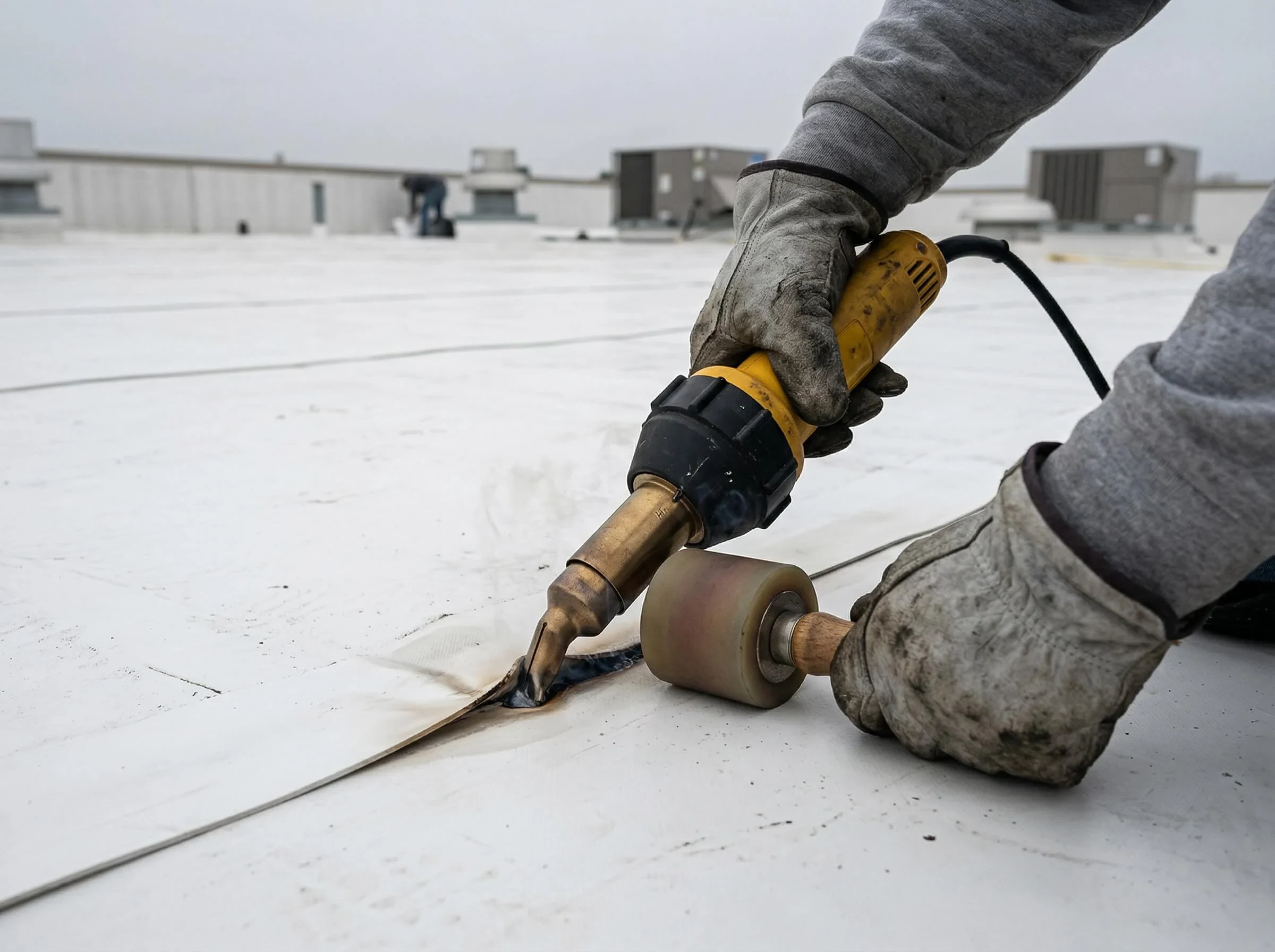
PVC Roofing Systems in Ontario, CA
PVC membrane specs for Ontario, CA restaurants, dealerships, and manufacturing roofs: grease and chemical resistance, weld parameters, and warranty terms.
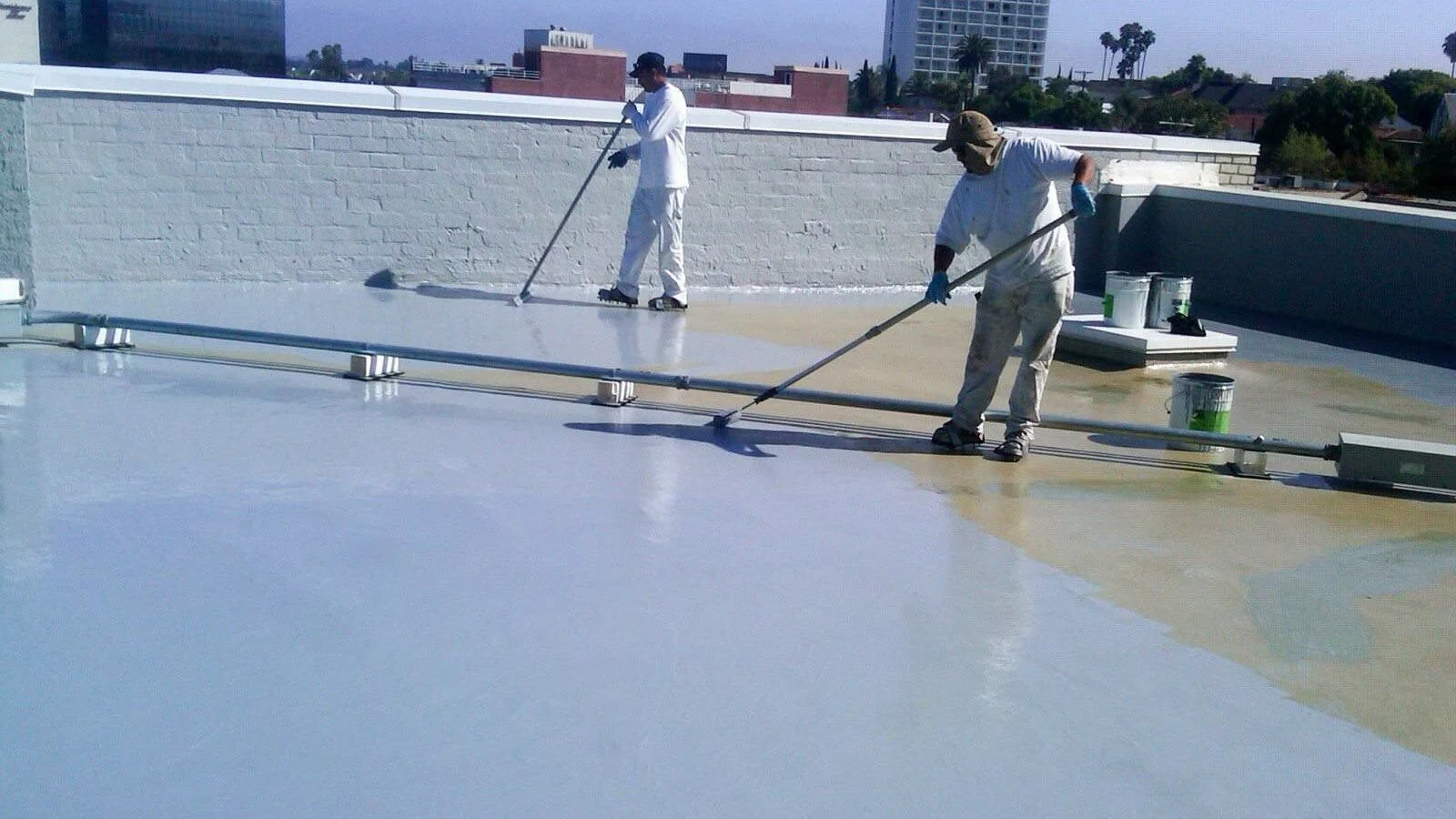
Silicone Roof Coatings in Ontario, CA
Silicone roof coating restoration for Ontario, CA commercial buildings: substrate prep, ponding-water performance, and the math against full tear-off.
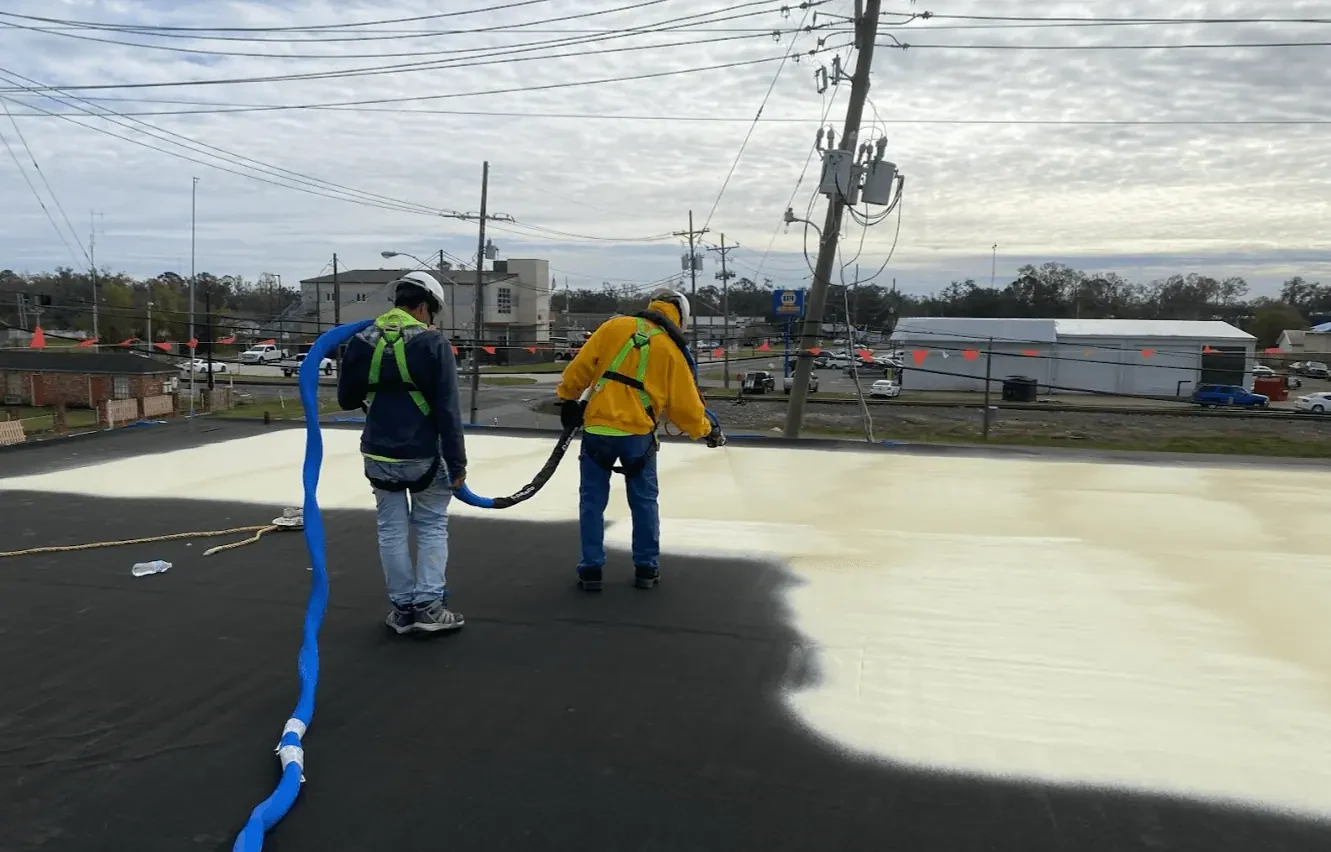
Spray Polyurethane Foam Roofing in Ontario, CA
SPF roofing for Ontario, CA buildings with dense rooftop equipment or ponding issues: application process, R-value math, and recoat maintenance cycles.